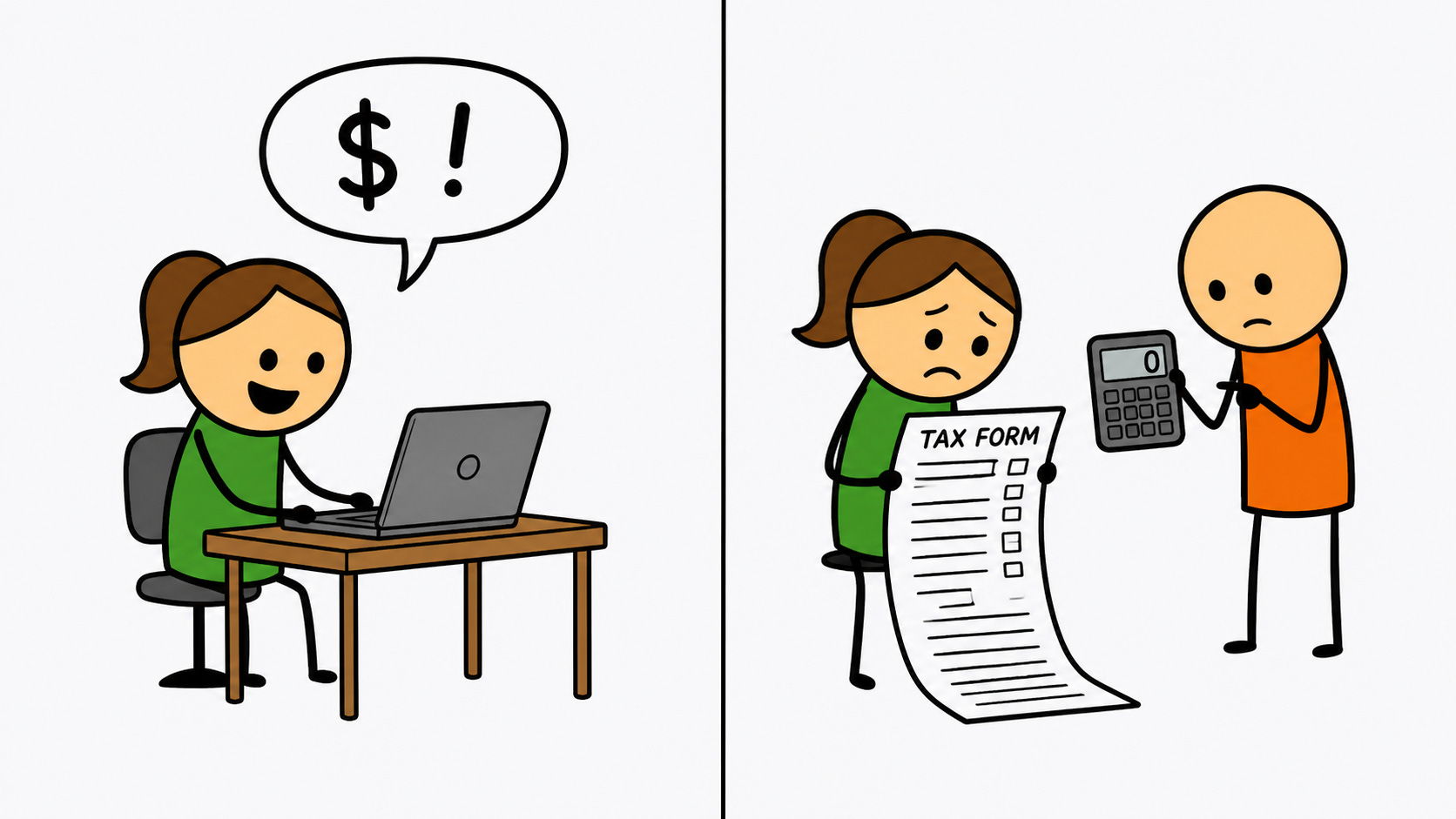
A consultant gets word in early December that her firm is paying out a much bigger year-end bonus than anyone expected. Three weeks later, $42,000 lands in her account just before Christmas. By the time her CPA prepares the return in February, her joint MAGI has jumped past the Roth phase-out ceiling. She’d already maxed her Roth IRA back in March. That contribution is now partly an excess contribution she needs to fix before the tax filing deadline.
The Roth IRA contribution limit doesn’t apply uniformly to every taxpayer. It scales with modified adjusted gross income according to a phase-out range that depends on filing status. The phase-out ranges live on the contribution limits page at RetirementNewsRundown.com and adjust each year for inflation.
Three filing statuses, three different ranges. Married filing jointly has a phase-out range that starts in the mid-200s and runs about $10,000 wide. Single and head of household have their own range, starting much lower and running about $15,000 wide. Married filing separately, for couples who lived together at any time during the year, gets a tiny range starting at $0 and ending at $10,000. That last one is functionally a complete bar to direct Roth contributions for almost everyone in that filing status.
MAGI sits one step above AGI. The IRS adds back several items to calculate MAGI for Roth purposes, including the Traditional IRA deduction, the student loan interest deduction, the foreign earned income exclusion, and a handful of other adjustments listed in IRS Publication 590-A. Most W-2 earners have a MAGI close to their AGI, but small differences matter when income lands near a phase-out boundary.
The math inside the phase-out range is proportional. The IRS worksheet measures how far MAGI has moved into the range, applies that percentage to the applicable IRA contribution limit, and subtracts the reduction from the limit. In practice: take MAGI minus the lower bound, divide by the range width, multiply by the contribution limit, and subtract that reduction from the limit. The result is rounded up to the nearest $10, with a minimum of $200 if any contribution is allowed at all. Below the lower bound, the full contribution is available. Above the upper bound, the allowed contribution drops to zero.
The contribution year is the calendar year. The contribution deadline is the tax filing deadline of the following year, generally April 15, with no extension available beyond that date. A contribution made in March based on projected MAGI becomes an excess contribution if year-end income pushes MAGI above the phase-out and the contributor doesn’t correct in time.
The correction window allows withdrawal of the excess contribution plus net income attributable by the tax filing deadline including extensions. Withdrawals inside the correction window avoid the 6% excise tax for that year. The earnings portion is taxable in the year the contribution was made. If the correction window closes with the excess still in the account, the 6% excise tax applies for that year and continues each subsequent year until the excess is removed or absorbed by future-year contribution room.
Recharacterization to a Traditional IRA is allowed for contributions, although not for Roth conversions. A Roth IRA contribution that exceeds the phase-out can be recharacterized as a Traditional IRA contribution (subject to its own deduction rules), which sidesteps the excess contribution problem entirely. The recharacterization deadline matches the correction window, ending at the tax filing deadline including extensions.
A couple files jointly. Both spouses are 45. Their joint MAGI lands four-tenths of the way into the Roth phase-out range. The math reduces their contribution proportionally. If the standard limit for the year is $7,500, each spouse can contribute $4,500 instead of the full amount. The other $3,000 of room each goes nowhere.
Run the same couple later in the year. The husband gets a promotion in October that adds $30,000 to his year-end income. Joint MAGI jumps to the upper bound of the phase-out range. The allowed contribution drops to zero. They each contributed the reduced amount in February based on their projected MAGI. Now both contributions are excess.
They have until the tax filing deadline including extensions to fix it. Two paths. They can withdraw the excess plus net income attributable, which avoids the 6% excise tax but creates a small taxable event for the earnings. Or they can recharacterize the Roth contributions as non-deductible Traditional IRA contributions, leaving the money invested and tracked on Form 8606. Both spouses choose the recharacterization route since they were planning a backdoor Roth conversion anyway. Form 8606 catches the basis on the way in, and the conversion happens later in the year.
Run it one more time. Joint MAGI is now $50,000 above the upper bound of the phase-out range. No direct Roth contribution is available to either spouse. They go straight to backdoor Roth from the start, contributing to non-deductible Traditional IRAs and converting to Roth, with the pro-rata rule applied separately to each spouse.
Same couple, three different income years, three different paths. The phase-out math runs the same way every time.
Roth IRA income limits exist to phase out a tax benefit at higher incomes. The phase-out math is straightforward once the year is over and MAGI is final. The complication arrives when contributions get made early in the year based on projected income that ends up wrong by December.
What matters for any couple navigating the phase-out is filing status, MAGI relative to the range that applies to that status, and timing on corrections if the year-end MAGI exceeds expectations. The correction window through the extended tax filing deadline catches almost every accidental excess. The 6% excise tax only attaches to excess contributions left in the account past that deadline.
The phase-out is just math.
I write one of these every day, one retirement rule, explained in plain language and verified against the source. The daily email is free: subscribe here.
Full archive, worksheets, and search live at RetirementNewsRundown.com.
Disclaimer This article is for educational and informational purposes only. It is not tax, legal, or financial advice and does not create an advisor–client relationship. Always consult appropriate professionals regarding your specific situation.