A solo 401(k) comes with less paperwork than almost any other retirement plan. No discrimination testing, no employee notices, and in the early years, no annual return to the IRS at all. Owners get used to that, and the plan runs on autopilot for years while the balance grows.
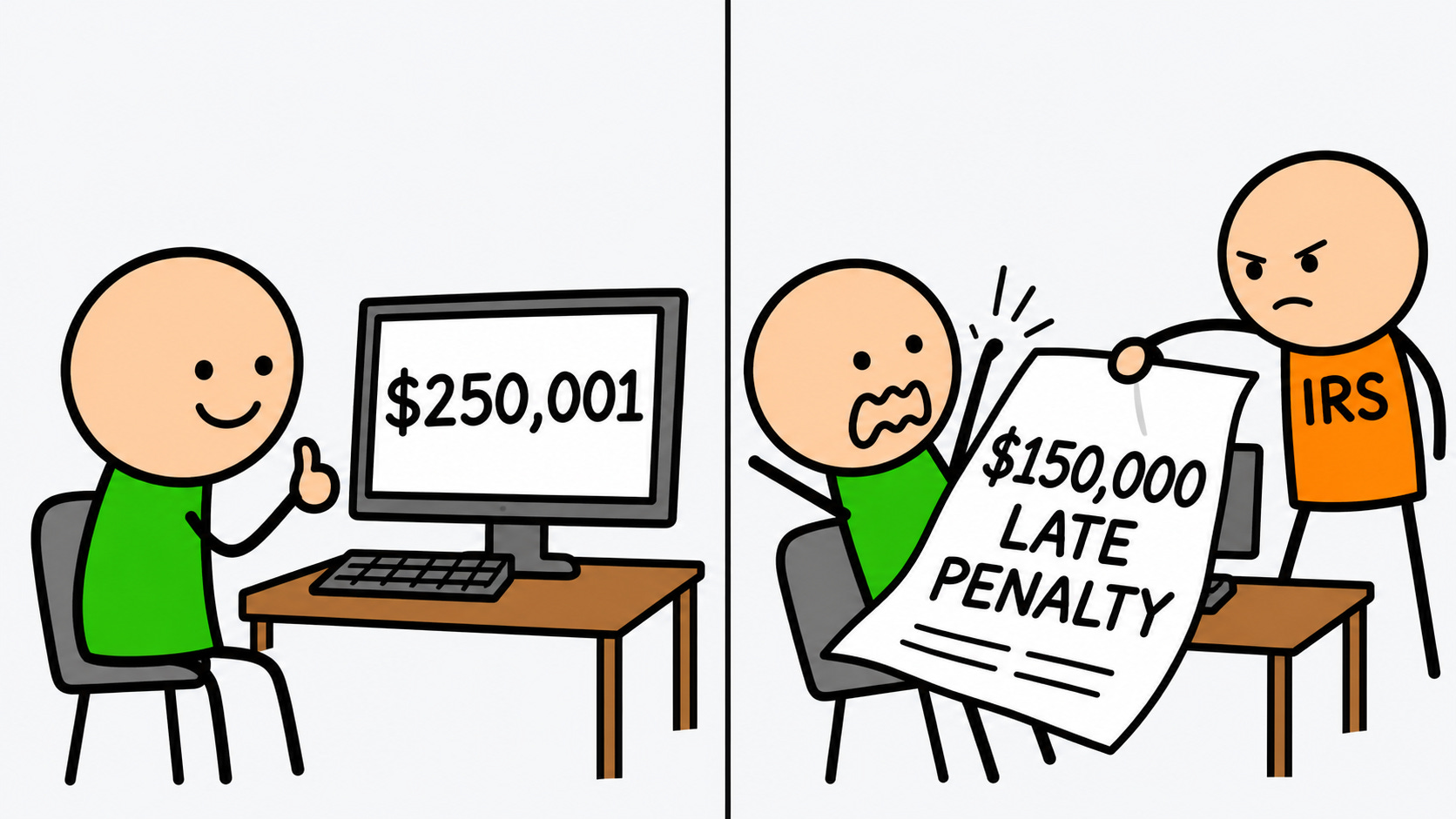
Then one December the balance passes $250,000, and the plan picks up an annual filing obligation. The IRS does not send a reminder, and the first notice can be a penalty.
The annual return for a one-participant plan is Form 5500-EZ. A one-participant plan is one that covers only the business owner, or the owner and spouse, when they own the whole business, or only partners and their spouses in a partnership. Most solo 401(k)s qualify.
The filing threshold looks at one number: total plan assets at the end of the plan year, the same figure the form reports as year-end assets. Contributions during the year do not matter, and neither does the high-water mark in June. If the year-end total is $250,000 or less, no return is required for that year. If it is more, a return is due.
Two details make that number bigger than people expect. It counts the whole plan, so a spouse’s account in the same plan adds to the total. And it combines every one-participant plan the employer maintains. An owner with a solo 401(k) and a separate one-participant plan, such as a small defined benefit plan, adds them together. Once the combined total passes $250,000, a 5500-EZ is due for every one of those plans, including any that hold less on their own.
The test runs fresh each year. A plan that crosses the line one year and falls back under it the next owes a return for the first year and none for the second. The one exception is the final year. When a plan terminates and distributes all of its assets, a final return is expected regardless of size, with the final-return box checked. A small plan that never filed a single 5500-EZ still files one at the end.
The deadline is the last day of the seventh month after the plan year ends, which is July 31 for a calendar-year plan. Filing Form 5558 by that date extends it once, by up to two and a half months, to October 15 for a calendar-year plan. A filer who has to submit at least 10 returns of any kind with the IRS during the calendar year the plan year begins, counting W-2s, 1099s, income tax returns and other required returns, generally must file the 5500-EZ electronically through the Labor Department’s EFAST2 system. A paper return from someone in that group counts as no return at all.
What happens if the return comes in later? The penalty for a late or missing 5500-EZ is $250 a day, up to $150,000 per plan year. It runs per plan, so an owner with two one-participant plans can face it twice. The IRS does run a relief program for late filers that cuts the cost substantially, but it is meant for filers who catch the miss themselves, before the IRS sends a penalty notice.
Priya is a sole proprietor whose solo 401(k) runs on a calendar year and covers her and her husband, who works in the business. At the end of one year, her account holds $210,000 and his holds $55,000. The plan total is $265,000, so a 5500-EZ is due for that year by July 31.
She files Form 5558 in July and gets until October 15. She issues more than 10 1099s and W-2s a year, so she has to file the return electronically through EFAST2.
The next year the market drops, and the plan ends the year at $240,000. No 5500-EZ is due for that year, even though the plan filed the year before.
Three years later she closes the business, terminates the plan, and rolls both accounts to IRAs, finishing the distribution in March. That year is the plan’s final year, and a 5500-EZ with the final-return box checked is due even though the plan holds nothing. If the final year is a short plan year ending in March, the deadline is October 31 of that same year. On a full calendar plan year, it is the following July 31.
Had she missed even the extended October 15 deadline and not noticed until December 31, she would be 77 days late. At $250 a day, that is $19,250, unless she used the late filer relief program first.
The 5500-EZ is an information return. It reports what the plan holds and does not add any tax. What triggers it is a single year-end number, combined across all of the owner’s one-participant plans, and the final year of any plan regardless of size.
What matters is checking the plan’s value every December 31, counting both spouses and any second plan, and remembering the final return when a plan closes. The late penalty is steep, and the relief program is the fix when a year has already slipped by. For owners still sorting out which plan type fits the business, our retirement plan selector compares the options side by side.
I write one of these every day, one retirement rule, explained in plain language and verified against the source. The daily email is free: subscribe here.
Full archive, worksheets, and search live at RetirementNewsRundown.com.
Disclaimer
This article is for educational and informational purposes only. It is not tax, legal, or financial advice and does not create an advisor-client relationship. Always consult appropriate professionals regarding your specific situation.