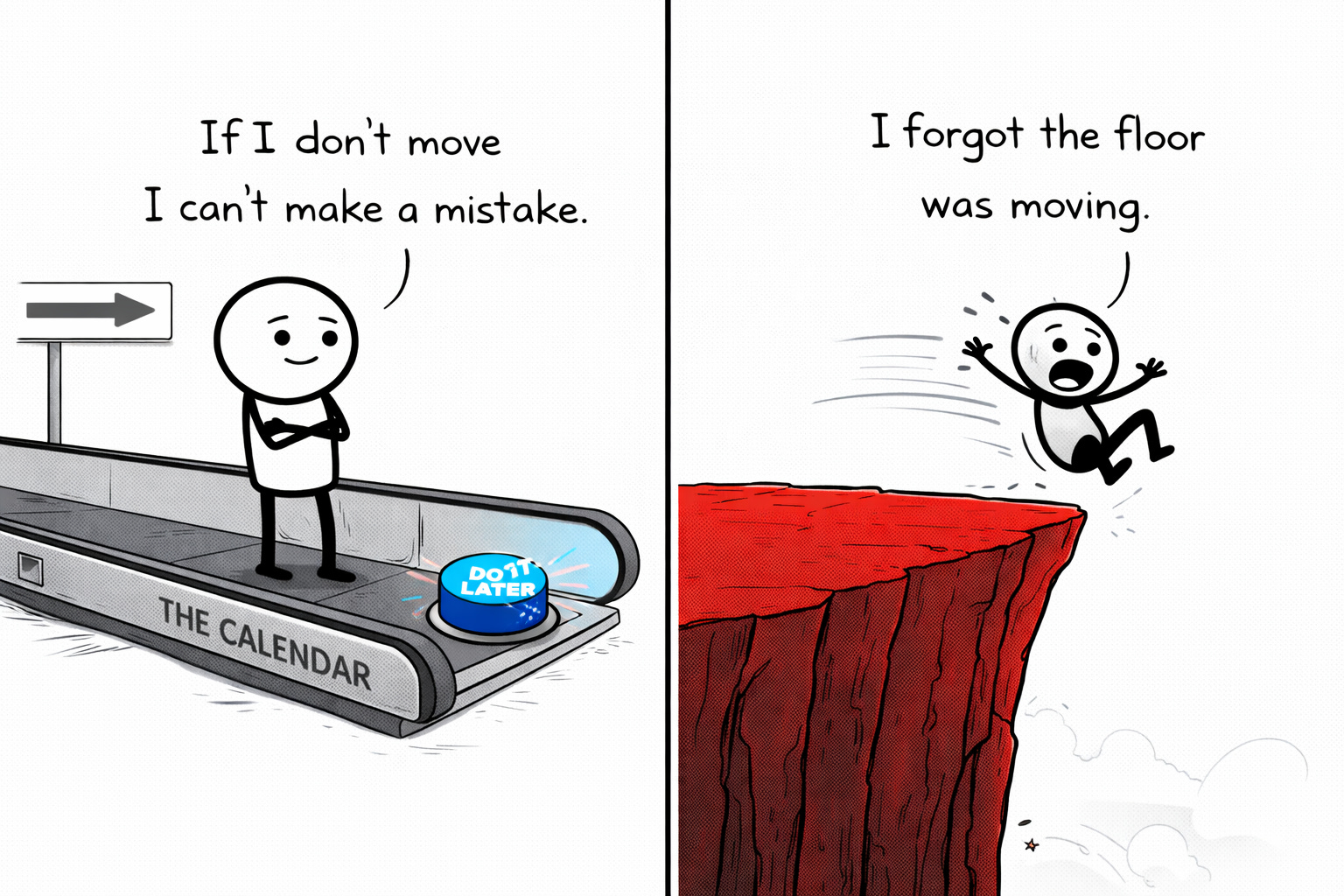
Doing nothing feels neutral.
It feels safe, patient, noncommittal. People say they are waiting for clarity, waiting for income to settle, waiting for the right time. In retirement accounts, doing nothing is especially comfortable because the system rarely interrupts you.
Accounts stay open. Balances fluctuate. Statements arrive on schedule. No alarms go off.
That calm creates the illusion that nothing is happening.
In reality, something is always happening. The system is just recording it quietly.
Retirement rules are built around measurement, not motion. Many of the most important rules do not require action to trigger consequences. They only require time to pass.
Calendar year deadlines are where inaction turns into outcomes. December 31 is the date that freezes contribution eligibility, RMD compliance, IRA balances for pro rata purposes, and whether certain opportunities have expired. Whether you acted or not, the year still closes.
Tax filing deadlines come later. They allow reporting and, in some cases, correction. They do not rewind the calendar year. They document what already happened.
Correction windows exist for specific situations. They allow some problems created by inaction to be fixed after the year ends without ongoing penalties. Once those windows close, inaction becomes permanent classification.
If something is done later instead, the system does not treat it as cautious delay. It treats it as missed, excess, failed, or taxable, depending on the rule involved.
Doing nothing is not a pause button. It is a choice to let the clock keep running.
Roth IRA contributions are one of the clearest examples.
Someone is eligible early in the year. Income is uncertain, so they decide to wait. Waiting feels responsible. Months pass. The year gets busy. Nothing is contributed.
December 31 arrives. The year closes.
At that moment, the opportunity to make a contribution for that year is gone. There is no penalty for missing it. There is also no recovery.
If a contribution is made later instead, it must be applied to the new year, even if income ends up higher and eligibility is lost. The system does not retroactively accept contributions for closed years.
Doing nothing was not neutral. It was the decision not to use that year.
Excess contributions show the opposite version of the same problem.
Someone makes a contribution they are not eligible for. They notice later but decide to deal with it after things settle down. Nothing breaks immediately. The account looks normal.
December 31 passes. The excess still exists.
If the excess is corrected by the tax filing deadline or extension, the issue can usually be resolved cleanly. If it is done later instead, after the correction window closes, penalties apply for each year the excess remains.
Doing nothing did not make the problem smaller. It made it more expensive.
Required minimum distributions make inaction especially costly.
An RMD is required for a specific calendar year. There is no enforcement during the year. Accounts function normally whether the distribution happens or not.
When December 31 passes, the system checks whether the required amount left the account.
If it did not, the RMD is officially missed. Taking it in January does not change that classification. It becomes a missed RMD followed by a corrective distribution.
If the correction process is handled properly, penalties may be reduced or waived. If it is done later instead or ignored, penalties apply based on the year that already closed.
Doing nothing was not waiting. It was choosing to miss the requirement.
Rollovers are another place where inaction quietly decides outcomes.
A distribution is taken with rollover intent. The money leaves the account. The plan is to move it later. Life intervenes. The funds sit.
The system starts the clock when the money leaves.
If the funds land in another eligible retirement account within the rollover window, the transaction qualifies. If they do not, the entire distribution is reclassified as taxable.
If the deposit happens later instead, even by a small margin, the classification does not soften. Taxes and potential penalties apply based on the original distribution date.
Doing nothing allowed the window to close.
Roth conversions also punish passive assumptions.
A conversion occurs. Other IRA balances exist, but there is an assumption that they will be handled later. Nothing forces immediate cleanup.
When December 31 arrives, the system looks at what IRA balances remained on that date.
If other IRA balances were still present, the conversion becomes taxable based on the year end total. If those balances had been moved out before December 31, even if they were large earlier in the year, the pro rata rule would not apply.
If cleanup happens later instead, after the year closes, the conversion outcome does not change. The system already recorded the snapshot.
Doing nothing allowed the snapshot to harden.
This is why retirement problems feel passive aggressive. People think they avoided making a decision when they actually made one by default.
The system does not require intent. It requires timing.
Calendar year deadlines determine what is locked in. Tax filing deadlines determine how outcomes are reported. Correction windows determine whether inaction can be fixed.
If something is done later instead, it does not reopen the decision. It applies a different rule set.
Understanding this removes unnecessary fear. It reframes mistakes as timing issues rather than hidden traps.
Doing nothing is still a decision. It just feels quieter than most.
Once that is understood, silence stops being comforting and starts being informative.
And that makes it much easier to understand where you stand.
I write one of these every day, one retirement rule, explained in plain language and verified against the source. The daily email is free: subscribe here.
Disclaimer
This article is for educational and informational purposes only. It is not tax, legal, or financial advice and does not create an advisor–client relationship. Always consult appropriate professionals regarding your specific situation.