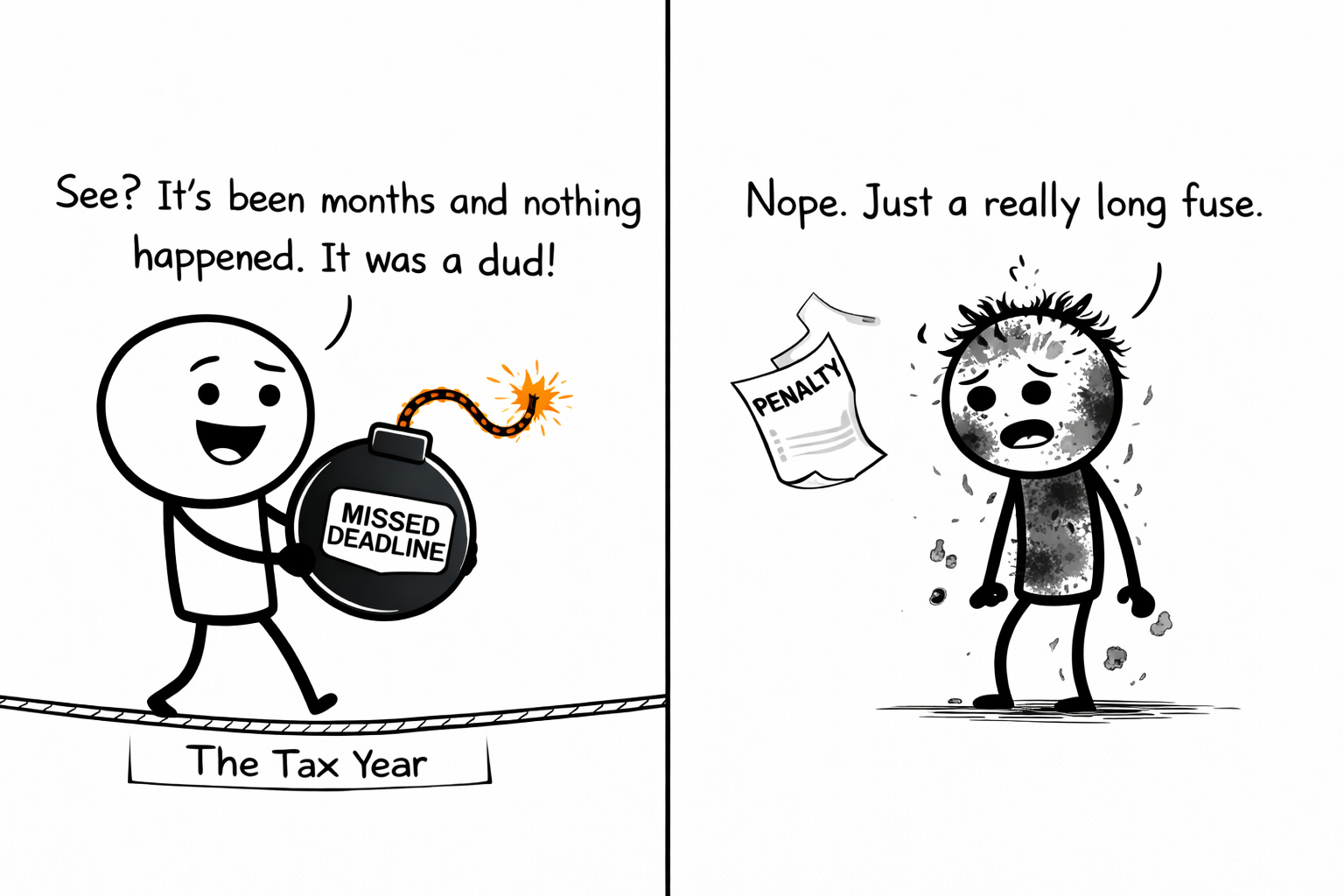
Most retirement problems arrive like jump scares.
One day everything feels normal. Accounts look fine. Nothing unusual shows up online. No one has called. Then a letter appears, a tax return kicks something back, or a distribution suddenly carries a penalty that no one remembers signing up for.
The immediate reaction is always the same. How did this happen so fast?
The answer is that it didn’t. It just felt fast because the system stayed quiet while the clock was running.
Retirement rules rarely announce themselves while you are breaking them. They tend to wait until the measuring period ends. By the time anyone notices, the outcome has already been determined.
The majority of retirement rules are not enforced in real time. They are enforced at checkpoints.
Calendar year deadlines are the first checkpoint. December 31 freezes the year. Contribution limits, income eligibility, RMD compliance, Roth conversion classification, and pro rata exposure all get evaluated based on what existed when that date passed.
Tax filing deadlines come later. They exist so reporting can catch up with what already happened. Filing does not reopen the year. It documents it.
Correction windows sit between those two. They allow certain mistakes to be fixed after the year ends without ongoing penalties. Once those windows close, the system does not reinterpret the original action.
If something is done later instead, the system does not treat it as late but acceptable. It treats it as a different category entirely.
That distinction explains why problems feel sudden. The rule was always there. Enforcement was just delayed.
A classic example starts with a Roth IRA contribution.
Someone contributes early in the year. Income estimates look fine at the time. The contribution posts. Investments grow. No warnings appear because income eligibility cannot be confirmed until the year is complete.
December 31 arrives. Final income numbers are known. Only then does the rule get checked.
If income ends up too high, the contribution becomes excess retroactively. Nothing new happened in December. The system just finally had enough information to evaluate it.
If the excess is corrected by the tax filing deadline or extension, the correction is usually clean. If it is done later instead, after the correction window closes, the excess remains and generates penalties for each year it stays in the account.
The problem did not appear suddenly. The clock simply ran out.
Required minimum distributions work the same way.
An RMD is required for a specific calendar year. There is no live enforcement mechanism that forces the withdrawal to occur. Accounts continue to operate normally whether the distribution happens or not.
When December 31 passes, the system checks whether the required amount left the account during the year.
If it did not, the RMD is officially missed. Taking it in January does not convert it into a late RMD. It becomes a missed RMD followed by a corrective distribution.
If the correction happens within the available relief process, penalties may be reduced or waived. If it is done later instead or not addressed properly, penalties apply based on the year that already closed.
Again, the issue did not appear overnight. It was measured at the end.
Rollover rules add another layer.
A distribution taken with rollover intent looks harmless on day one. The money leaves the account. The balance adjusts. Nothing flags the transaction as wrong.
The rule only gets evaluated after the rollover window expires.
If the funds are deposited into another eligible retirement account within the allowed period, the transaction qualifies. If they are not, the system reclassifies the entire distribution as taxable.
If the deposit happens later instead, even by one day, the reclassification does not soften. The original distribution date controls the outcome. Taxes and penalties follow from that date, not from when the mistake was discovered.
The rollover did not fail suddenly. The window simply closed.
Roth conversions introduce the same delayed clarity through the pro rata rule.
A conversion can look straightforward when it happens. Assets move. Taxes may be withheld. Everything posts cleanly.
At year end, the system looks across all traditional IRAs to determine whether pre tax and after tax money existed during the year. That snapshot determines how much of the conversion is taxable.
If other IRA balances existed at any point in the year, the conversion becomes subject to pro rata treatment, unless those balances were rolled into a 401(k) or similar non-IRA plan before December 31.
If accounts are cleaned up later instead, the conversion from the closed year does not get recalculated. The rule was evaluated using the information available at the checkpoint.
Nothing about the conversion changed. The measurement simply finished.
This pattern explains why retirement problems feel emotional when they finally surface. People assume enforcement would have been immediate if something was wrong. They assume silence means approval.
In reality, silence usually means the system is waiting.
Calendar year deadlines determine eligibility and compliance. Tax filing deadlines determine how those outcomes are reported. Correction windows determine whether penalties can be avoided or minimized.
When something is done later instead, it does not move backward into compliance. It moves forward into a different rule set.
Understanding that removes much of the fear. The system is not unpredictable. It is procedural.
Most issues are not caused by reckless behavior. They are caused by delayed awareness of rules that only get checked at the end.
Once you see that pattern, the suddenness disappears. What remains is clarity.
And clarity is almost always quieter than panic.
I write one of these every day, one retirement rule, explained in plain language and verified against the source. The daily email is free: subscribe here.
Disclaimer
This article is for educational and informational purposes only. It is not tax, legal, or financial advice and does not create an advisor–client relationship. Always consult appropriate professionals regarding your specific situation.