A business owner adopts a cash balance plan in March for the current year, signs the documents, sends a copy to her CPA, and forgets about it. September rolls around. Her CPA emails asking when the contribution is going in. She types back that she’ll get to it next week. Next week becomes the week after. The extended tax deadline passes. The contribution still hasn’t been wired. She’s now standing on the wrong side of three different deadlines she didn’t realize were three different deadlines, and the IRS has a specific opinion about each one.
Cash balance plans run on a deadline calendar that catches people who treat them like an IRA. The plan adoption deadline, the funding deadline, and the deduction deadline Calendar reference: Retirement Account Deadlines (calendar context for plan-establishment cutoffs). are three separate things that sometimes overlap on the calendar but never collapse into one rule.
Plan adoption is the first deadline. A new cash balance plan must be adopted by the end of the tax year for which the employer wants the plan to be effective, with one exception. Under SECURE Act Section 201, an employer can generally adopt a qualified retirement plan by the due date of the employer’s tax return, including extensions, and elect to treat the plan as effective for the prior tax year. That rule can apply to a cash balance plan because it does not rely on employee elective deferrals. It does not retroactively create elective deferral opportunities for a 401(k) feature. If adoption misses the extended tax filing deadline, the plan can’t apply to that prior year. The employer can still adopt a plan going forward, but the deduction window for the year that just ended is closed.
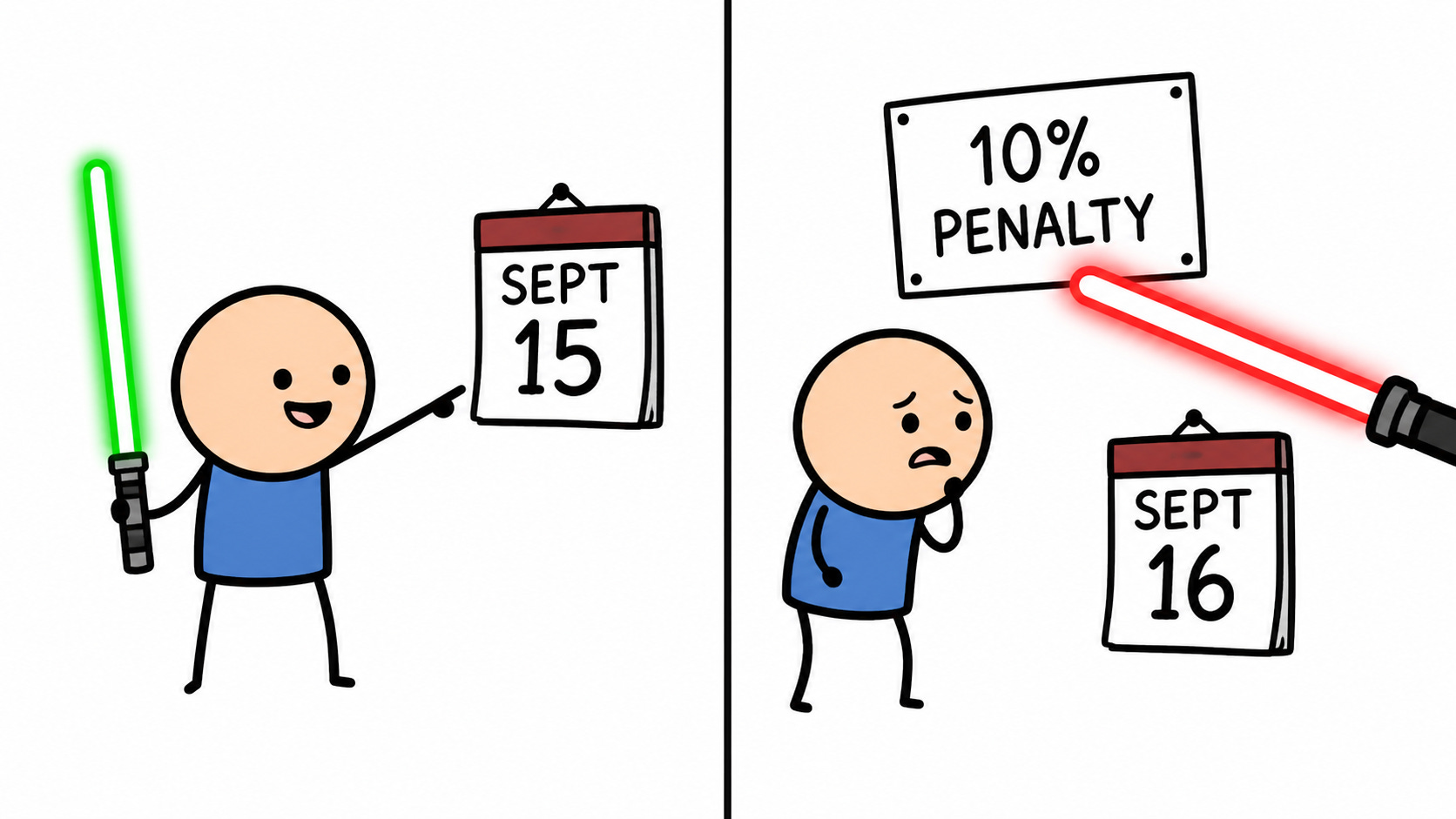
Funding is the second deadline. Cash balance plans are subject to the minimum required contribution rules under IRC Section 430. For a plan with a calendar plan year, the final installment of the minimum required contribution is due 8.5 months after the end of the plan year, which lands on September 15 for a calendar-year plan. Quarterly installments may also apply during the year for plans that aren’t fully funded. Missing the 8.5-month funding deadline triggers the IRC Section 4971 excise tax, which starts at 10% of the unpaid minimum required contribution. If the underpayment isn’t corrected within the statutory correction period, an additional 100% excise tax under Section 4971(b) can apply.
Deduction is the third deadline. The deduction deadline and funding deadline do not always fall on the same date. For calendar-year S-corporations and partnerships on extension, both commonly land on September 15. For sole proprietors and C-corporations on extension, the income tax filing deadline may extend to October 15, while the cash balance minimum funding deadline can still fall on September 15. A contribution made after the deduction deadline shifts the write-off to the following tax year, even if it satisfies the funding obligation.
Form 5500 has its own deadline. The annual return is due seven months after the plan year ends, which is July 31 for a calendar-year plan, with a 2.5-month extension available on Form 5558 that pushes the deadline to October 15. Missing Form 5500 triggers separate IRS and DOL penalties that scale by the day. The Department of Labor’s Delinquent Filer Voluntary Compliance Program offers a reduced penalty for late filers who self-correct.
Each deadline answers the same question differently. Miss adoption: the plan can’t apply to the prior year. Miss funding: the 4971 excise tax starts running. Miss the deduction window: the deduction shifts to next year. Miss Form 5500: per-day penalties accrue until the form is filed.
A 56-year-old chiropractor runs a calendar-year cash balance plan as an S-corporation. The plan was adopted three years ago and has been running cleanly. This year her actuary calculates a minimum required contribution of $185,000.
Her CPA files her S-corp return on extension, pushing the deadline to September 15. The plan year ended December 31. She has two relevant deadlines hitting on the same day, the S-corp filing deadline and the 8.5-month funding deadline.
She wires $185,000 on September 12. The contribution counts toward the minimum required contribution for the prior plan year. The deduction lands on the prior year’s S-corp return. Form 5500 was filed in June. Everything stacks up clean.
Run the same scenario with a four-week delay. She wires the contribution on October 14 instead. The S-corp deduction window closed on September 15, so the contribution can’t be deducted on the prior year’s return. The funding deadline of September 15 was also missed, so the 4971 excise tax exposure attaches to the unpaid amount as of September 16. She files IRS Form 5330 to report and pay the excise tax. The contribution does eventually satisfy the funding obligation once it’s wired, but the cost of the four-week delay is the excise tax plus a deduction shifted to the following tax year.
Now run it again with a longer delay. She wires the contribution on December 1. The 4971 excise tax exposure has been sitting there since the missed funding deadline. If the underpayment is not corrected within the statutory correction period, the additional 100% excise tax under 4971(b) can apply. The plan’s funding status is now classified as deficient, which triggers additional reporting obligations and potential restrictions on plan amendments.
Same plan. Same contribution amount. Three different outcomes driven entirely by the date the wire hit.
Cash balance deadlines aren’t suggestions and they aren’t interchangeable. The plan adoption deadline answers whether the plan exists for the prior year. The funding deadline answers whether the IRS is going to start charging penalties. The deduction deadline answers when the contribution lowers a tax bill. Form 5500 answers whether the plan stays in good standing with the DOL.
Most owners who run into trouble aren’t ignoring the rules. They’re conflating the deadlines, treating funding day and filing day as the same thing because they sometimes are. The owners who stay clean track all three on a separate calendar entry and start the wire process at least two weeks before the earliest one.
I write one of these every day, one retirement rule, explained in plain language and verified against the source. The daily email is free: subscribe here.
Full archive, worksheets, and search live at RetirementNewsRundown.com.
Disclaimer This article is for educational and informational purposes only. It is not tax, legal, or financial advice and does not create an advisor–client relationship. Always consult appropriate professionals regarding your specific situation.