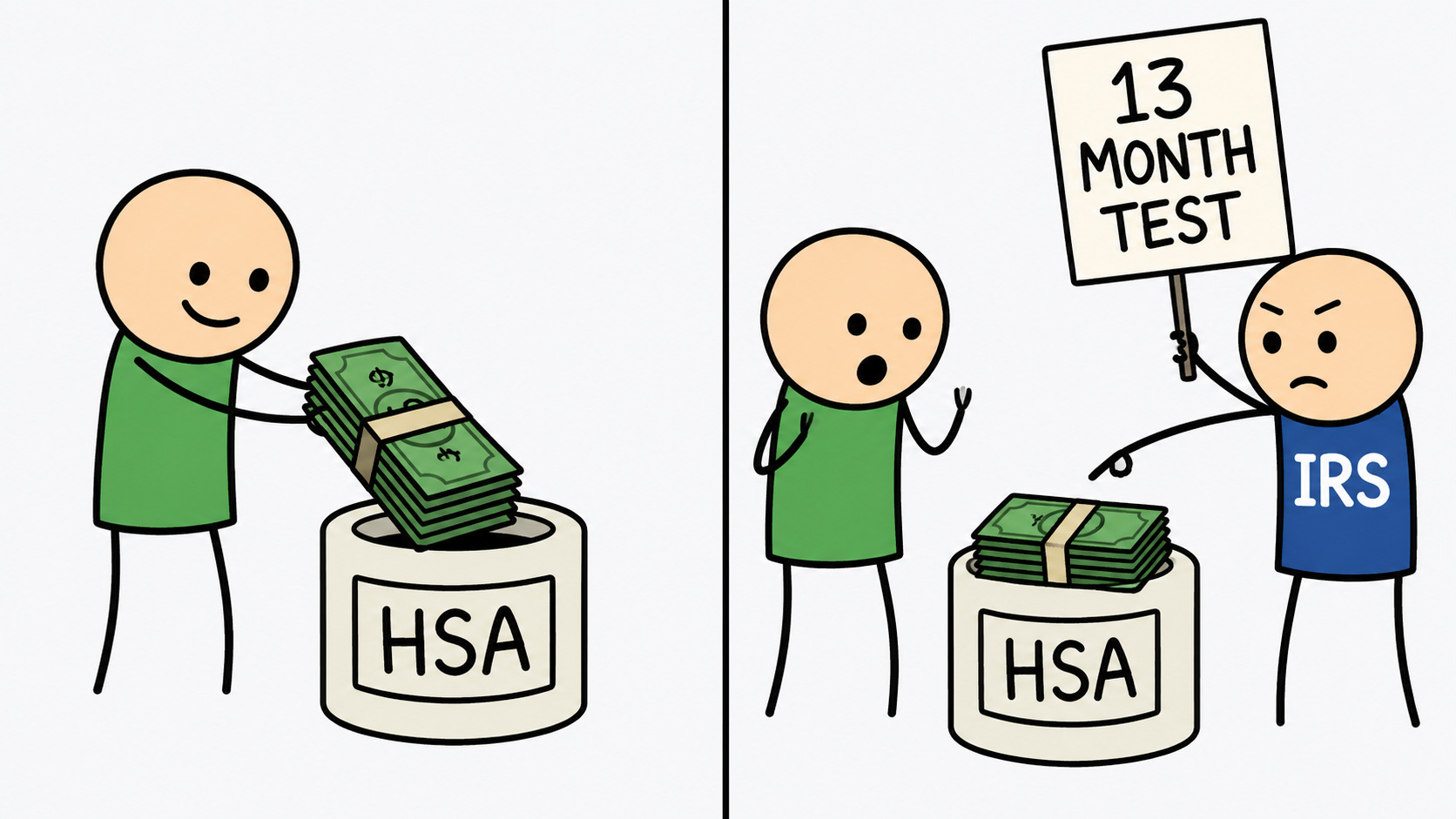
The Health Savings Account looks similar to other tax-advantaged accounts at first glance. It sits next to flexible spending accounts on a benefits page. It funds with pre-tax dollars. It pays for medical expenses. The similarities make it easy to assume an HSA is just a slightly different flavor of the same thing. The structure underneath is quite different.
The HSA is a separate account with its own ownership, its own rollover characteristics, and a triple tax advantage that no other workplace account offers. The catch is that contributing to one requires meeting a specific eligibility test every month. Most people who think they have HSA access actually have HSA access during the months their employer-provided health coverage qualifies. Other months, the door is closed. Knowing which months count is most of the work.
Eligibility to contribute hinges on a few conditions, met for each month being counted toward the limit. The participant must be covered by a high-deductible health plan, an HDHP, with a deductible and an out-of-pocket limit that fall within ranges the IRS publishes for the year. The participant cannot have other disqualifying coverage, including general health insurance, most general-purpose flexible spending accounts, and Medicare enrollment. The participant cannot be claimed as a dependent on someone else’s return.
The contribution limits come in two shapes. A self-only HDHP allows one annual limit. A family HDHP allows a higher annual limit. Both amounts are indexed and published before each calendar year. A participant who is age fifty-five or older during the year may add a catch-up contribution of one thousand dollars per year. That figure is set by statute and is not indexed.
For a participant with HDHP coverage all year, the full annual limit applies. For partial-year coverage, the limit is generally prorated by month, with one twelfth applying for each eligible month.
The last-month rule is the exception. A participant who is HSA-eligible on the first day of December can contribute the full annual limit for that year, even with only one month of actual eligibility. The trade-off is a thirteen-month testing period. The participant must remain HSA-eligible through the entire following calendar year. If eligibility ends during that period, the excess from the prior year becomes taxable income in the year eligibility was lost, plus a ten percent additional tax.
The contribution deadline is April 15 of the year following the contribution year. This is the tax filing deadline without extensions. A filing extension does not extend the HSA contribution deadline. April 15 is the cutoff regardless of when the return is actually filed.
An excess HSA contribution carries a six percent excise tax for every year the excess sits in the account uncorrected. The correction window is the tax return due date for that year, including extensions, which can give additional time past the contribution deadline to fix an over-contribution by withdrawing the excess plus its earnings.
What happens if you do this later instead. A participant who contributed during ineligible months has an excess contribution, and the six percent applies for the year. After the correction deadline, the clean excess-with-earnings fix is generally gone for that year. The excess may be absorbed by later contribution capacity or removed under the regular distribution rules, which can stop the 6% tax going forward, but prior-year excise taxes do not magically leave because everyone feels bad. Once enrolled in Medicare, contributions stop. The existing balance can still be used for qualified medical expenses tax-free, but new contributions cannot be made.
Someone leaves a job in October that did not include HDHP coverage. They start a new job on November first with an HDHP and become HSA-eligible by December first, meeting the last-month rule requirements. They contribute the full annual family limit for the year on the strength of that one eligible month.
In March of the following year, they switch back to a non-HDHP plan during a family coverage change. They are still inside the thirteen-month testing period that started when they used the last-month rule, and they have lost HSA eligibility.
The portion of the contribution that was not earned by actual months of eligibility becomes taxable income in the year eligibility ended. A ten percent additional tax applies on that amount. The portion corresponding to actual eligible months stays in the HSA without issue. The last-month rule was not free in their case. The conditional benefit unwound when the testing period was not satisfied.
The HSA is unique among workplace accounts. After age sixty-five, non-medical withdrawals avoid the HSA additional tax, but they are still taxable as ordinary income. Qualified medical withdrawals remain tax-free. None of that helps a participant contributing during months when eligibility did not actually exist.
What truly matters is matching contributions to actual eligibility. HDHP coverage on the right months allows contributions for those months. General-purpose flexible spending accounts, Medicare, or certain other plans cancel eligibility for any month they overlap. Dependent status does the same for the year.
The deadlines are worth holding in view. The contribution deadline is April 15, and it is not extended by a tax filing extension. The correction window for an excess HSA contribution is the tax filing deadline including extensions, which gives some room past the contribution deadline to fix an over-contribution.
For participants with HDHP coverage all year and a clean coverage situation otherwise, the HSA is simple and powerful. The complexity shows up in partial-year coverage, last-month-rule usage, Medicare timing, and interactions with other health coverage. Recognizing where the trap lives is most of what it takes.
I write one of these every day, one retirement rule, explained in plain language and verified against the source. The daily email is free: subscribe here.
Full archive, worksheets, and search live at RetirementNewsRundown.com.
Disclaimer This article is for educational and informational purposes only. It is not tax, legal, or financial advice and does not create an advisor–client relationship. Always consult appropriate professionals regarding your specific situation.