A SIMPLE IRA is an employer retirement plan, not a personal IRA with a cute name. That matters because the employer has to formally establish the plan, provide employee notices, allow eligible employees to make salary reduction elections, and commit to the required employer contribution formula.
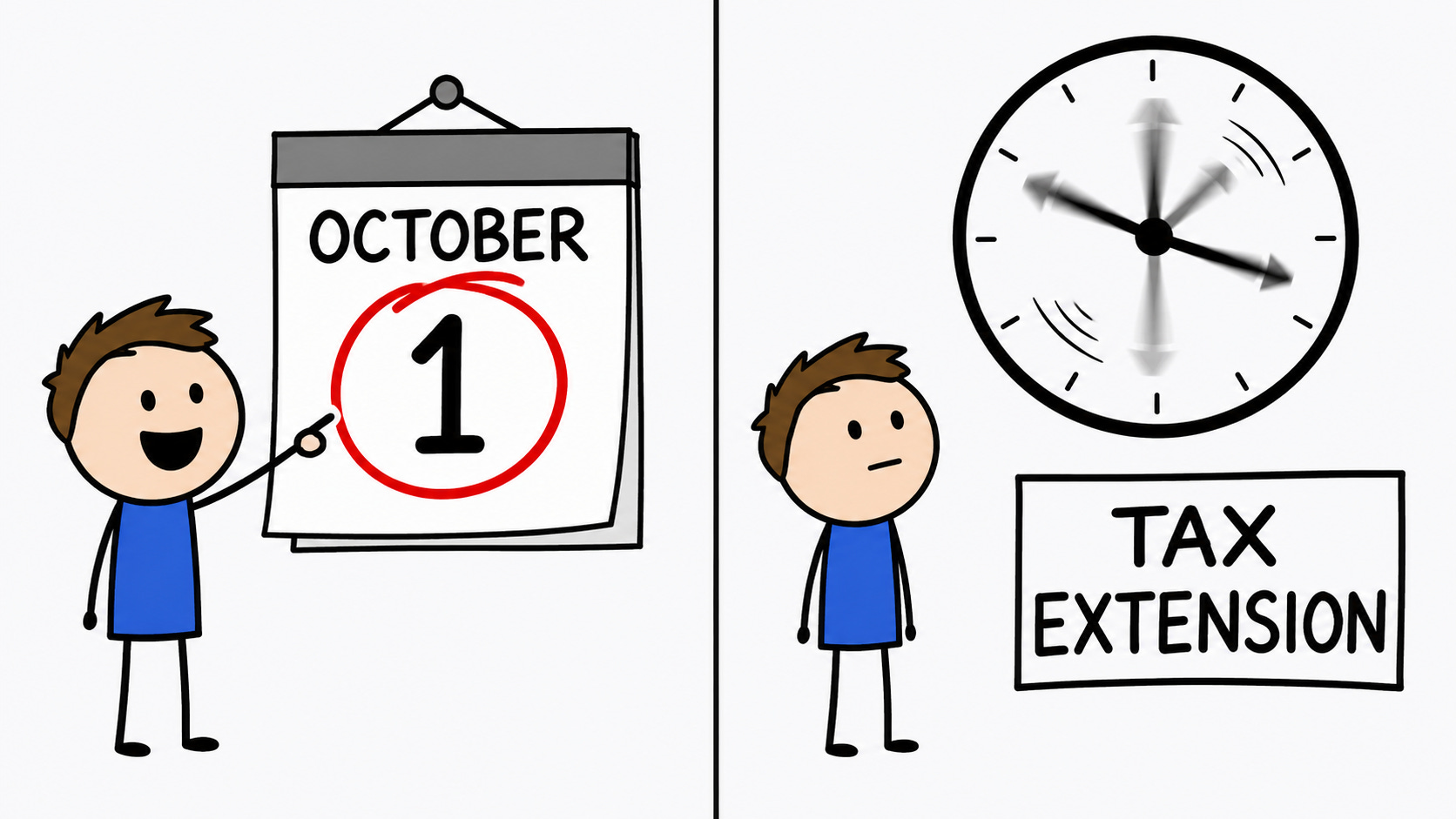
That is why the October 1 deadline exists. Calendar reference: Retirement Account Deadlines (October 1 section). The plan is not just a deduction bucket the owner can open after the year is over. Employees need an opportunity to participate during the year. The plan needs to exist while compensation is being earned and payroll elections can still matter.
The general rule is that a SIMPLE IRA plan must be established between January 1 and October 1 to be effective for that calendar year. SIMPLE IRA plans are calendar-year plans. That means the setup deadline is tied to the year the contributions are supposed to belong to.
If the employer misses October 1, the usual result is that the business cannot set up a brand-new SIMPLE IRA for that same year. The owner can still look at other retirement plan options, but the SIMPLE IRA window has generally closed.
Doing it later does not move the deadline. Filing the business tax return later does not revive the SIMPLE IRA setup window. Getting a tax extension does not turn October 1 into the extended filing deadline. The extension may help with filing paperwork or funding certain other plans, but it does not make a late SIMPLE IRA setup retroactively valid for the year.
This is where the calendar-year deadline, tax-filing deadline, and correction window need to be separated.
The calendar-year deadline is the October 1 SIMPLE IRA setup deadline. That is the gate for creating the plan for that year.
The tax-filing deadline is different. Employer SIMPLE IRA contributions generally have their own funding deadline tied to the business return due date, including extensions. That helps with funding an already established SIMPLE IRA. It does not allow the employer to establish the plan after October 1 for the prior year.
The correction window is also different. Correction rules may help when a plan exists and something was done incorrectly, such as a missed deposit, wrong contribution, or notice failure. A correction window is not a time machine for adopting a plan that did not exist before the setup deadline. Retirement rules do occasionally allow fixes. They do not hand out magic wands, which feels unfair but consistent.
There is one important exception. If a business comes into existence after October 1, it may be able to establish a SIMPLE IRA as soon as administratively feasible after the business begins. That exception is for a newly established employer, not an existing business that waited too long because October was being rude.
There is also a rule for employers that previously maintained a SIMPLE IRA plan. If the employer is setting up another SIMPLE IRA after previously having one, the plan generally can only be effective on January 1 of a year. That is another reason the “we’ll just start it late” idea can run into a wall.
Assume a small business owner has been operating all year and decides on October 15 that a SIMPLE IRA would be perfect.
The owner wants employees to make salary reduction contributions for the current year. The owner also likes that SIMPLE IRAs are easier to administer than many other employer plans. All reasonable thoughts. The problem is that the plan was not established by October 1.
Because the business already existed before October 1, the new-business exception does not help. Because the plan was not established by the calendar-year setup deadline, the owner generally cannot create a brand-new SIMPLE IRA on October 15 and make it effective for the same year.
If the owner waits until tax season and asks whether the SIMPLE IRA can be opened before filing the business return, the answer does not improve. The tax-filing deadline may matter for funding employer contributions to an existing SIMPLE IRA. It does not reopen the setup deadline for a plan that was never adopted.
Now change the facts.
Assume the business legally begins operations after October 1. In that case, the owner may be able to establish a SIMPLE IRA as soon as administratively feasible after the business comes into existence. That is not the same as ignoring October 1. It is the rule recognizing that a business cannot establish a plan before the business exists. Very generous of the system to acknowledge linear time.
The outcome depends on what clock is running. Existing business before October 1, the regular October 1 setup deadline matters. New business after October 1, the administratively feasible exception may matter. Tax extension, different clock entirely.
The October 1 SIMPLE IRA deadline is not complicated once the clocks are separated.
For setup, think calendar year. The plan generally has to exist by October 1 for that year. For funding employer contributions, think tax-filing deadline. For mistakes inside an existing plan, think correction rules. Those are three different lanes, and retirement rules do not enjoy lane changes.
The good news is that missing October 1 does not mean the business owner has failed retirement planning forever. It usually means the SIMPLE IRA door for that year closed, and the owner needs to understand what other doors may still be open.
The bad news is that the SIMPLE IRA setup deadline is not forgiving just because tax season is still months away.
That is the part people miss. October 1 is not a reminder date. It is the setup gate.
I write one of these every day, one retirement rule, explained in plain language and verified against the source. The daily email is free: subscribe here.
Full archive, worksheets, and search live at RetirementNewsRundown.com.
Disclaimer
This article is for educational and informational purposes only. It is not tax, legal, or financial advice and does not create an advisor–client relationship. Always consult appropriate professionals regarding your specific situation.