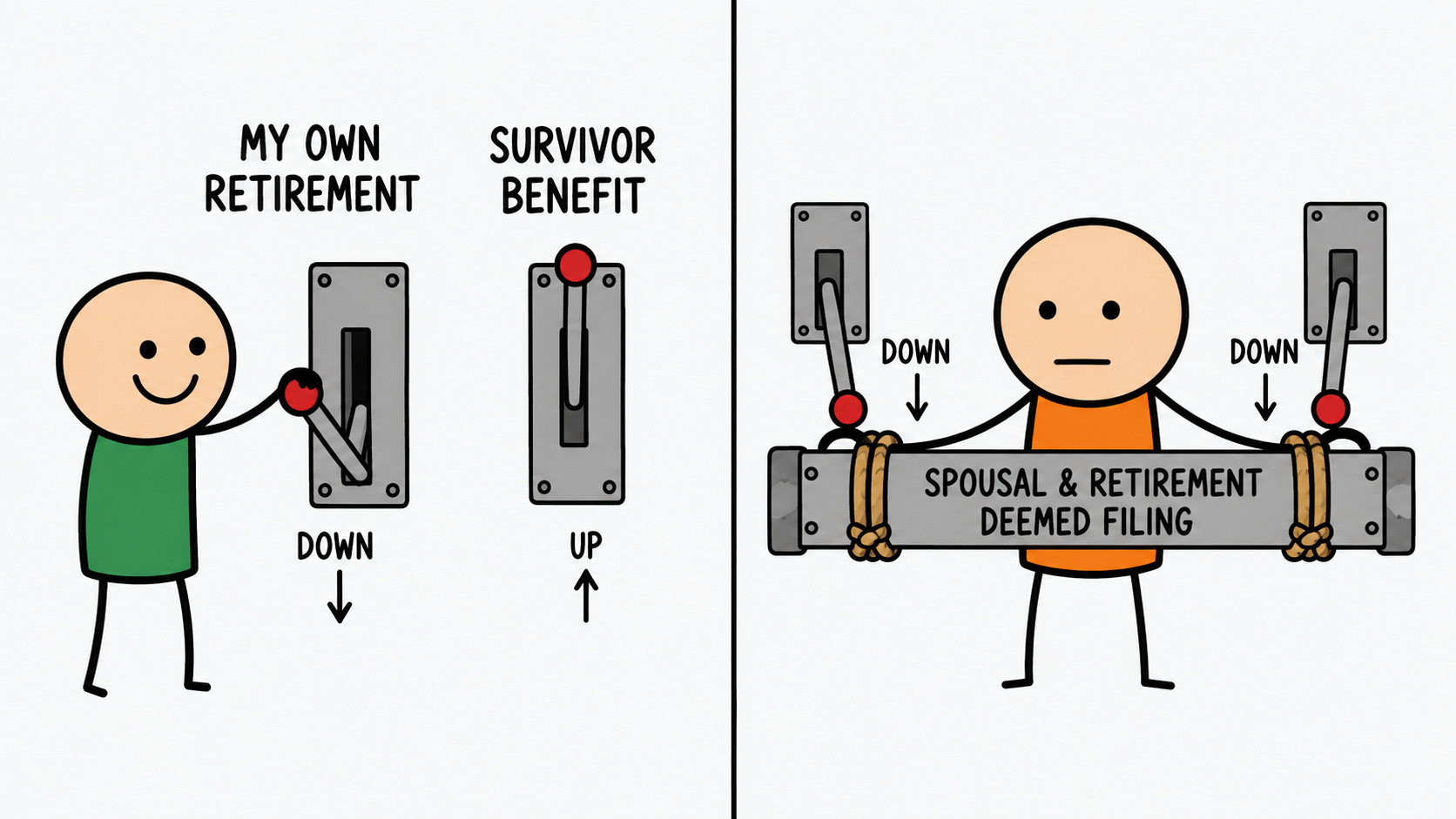
When a spouse dies, the survivor does not simply keep collecting both Social Security checks the couple had been receiving. One check goes away. What the survivor is left with is governed by the survivor benefit, a separate set of rules that most people assume mirrors the spousal benefit they may have heard about. It does not. The survivor benefit is more generous, can be available earlier than standard retirement or spousal benefits, and carries a flexibility those benefits do not. Understanding how it actually works is what separates a survivor who collects what they are entitled to from one who locks in a smaller check by accident.
The first and largest difference from the spousal benefit is the size. Where a spousal benefit tops out at half the worker’s primary insurance amount, a survivor benefit can reach up to one hundred percent of the deceased spouse’s benefit amount, including delayed credits when they apply, subject to the survivor’s own claiming age and the survivor-benefit rules. The survivor can step into the full amount their spouse’s record was paying, not half of it. This is why losing a spouse, for the lower earner in particular, can mean their own check disappears and is replaced by the deceased’s larger one.
That phrase, the deceased spouse’s benefit amount, carries a crucial consequence that reaches back into the couple’s earlier decisions. The survivor benefit reflects the deceased’s actual benefit, including the effect of when they claimed. If the higher earner delayed their own claim and grew their check with delayed credits, those credits pass through to the survivor benefit permanently. If instead the higher earner claimed early and took a reduced check, the survivor benefit is generally built on that reduced amount. The claiming decision the higher earner made during their lifetime sets the floor or the ceiling for what the survivor collects for the rest of theirs. This is the mechanism behind the idea that a couple’s most consequential Social Security decision often belongs to the higher earner, because that choice echoes into the survivor’s income years after the worker is gone.
The second difference is timing. Survivor benefits become available as early as age sixty, two full years before a person’s own retirement benefit can begin. A disabled survivor can claim as early as fifty. But claiming a survivor benefit before the survivor’s own full retirement age reduces it, and the reduction is significant. Claiming at the earliest age of sixty brings the survivor benefit down to roughly seventy one and a half percent of the full amount, with the reduction easing as the survivor approaches full retirement age. It is also worth knowing that the full retirement age used for survivor benefits follows its own schedule and can differ slightly from the full retirement age for a person’s own retirement benefit.
Survivor benefits also stop growing at full retirement age. The one hundred percent figure is the ceiling. Unlike a person’s own retirement benefit, which keeps climbing with delayed credits until seventy, waiting past full retirement age to claim a survivor benefit adds nothing. There is no delayed credit on the survivor benefit itself.
The third difference is the one that creates real planning room, and it is the flexibility. The deemed filing rule that forces most people to claim their own and spousal benefits together does not apply to survivor benefits. A survivor is allowed to claim one benefit now and switch to the other later. This means a survivor can take a reduced survivor benefit early while letting their own retirement benefit keep growing with delayed credits until seventy, then switch to their own larger benefit at that point. Or they can do the reverse, drawing their own reduced benefit early and switching to an unreduced survivor benefit at their survivor full retirement age. The two benefits are separate levers, and the survivor can pull them in sequence rather than being locked into one at the moment of first claiming.
One more rule shapes eligibility. Remarriage before age sixty ends the ability to collect on the deceased spouse’s record. Remarriage at sixty or later has no effect at all, and the survivor keeps their eligibility. This single age line is why the timing of a remarriage can matter to a survivor benefit in a way that surprises people. There are also basic eligibility rules underneath this, including a general nine month marriage requirement, with exceptions, but the timing mechanics are where most retirees get surprised.
Picture a couple where one spouse was the higher earner with a benefit of three thousand dollars a month, and the other had a smaller benefit of twelve hundred. While both are alive they collect both checks, forty two hundred a month between them.
One spouse dies. The survivor does not keep both checks. Practically, the survivor ends up with the larger benefit amount, not both checks stacked together, and because the survivor benefit can reach one hundred percent of the deceased’s amount, a survivor at their own full retirement age steps up to the full three thousand the deceased had been receiving. Their own twelve hundred dollar benefit is effectively absorbed into the larger survivor amount. The household income drops from forty two hundred to three thousand, which is a real decline, but the survivor benefit rescues the larger of the two checks rather than the smaller.
Now suppose the higher earner had delayed to seventy before death, growing that three thousand into something closer to thirty seven hundred through delayed credits. Those credits pass through. The survivor benefit is built on the enhanced amount, so the survivor collects the larger figure for life. The higher earner’s patience, years earlier, permanently raised the survivor’s income.
The flexibility appears if the survivor also has a decent record of their own. A survivor whose own benefit will grow to exceed the survivor benefit by age seventy might take the survivor benefit first and let their own climb, then switch. A survivor whose own benefit will always be smaller might do the opposite, taking their own reduced benefit early and stepping up to the unreduced survivor benefit at their survivor full retirement age. The right sequence depends entirely on the relative sizes of the two benefits and the survivor’s age.
The resolution is recognizing that the survivor benefit is a different animal from the spousal benefit, not a version of it. It reaches one hundred percent rather than fifty. It starts at sixty rather than sixty two. It inherits the deceased’s delayed credits. And it escapes deemed filing, which means the survivor can sequence it against their own retirement benefit instead of being forced to choose once and for all.
The variables that decide what a survivor actually collects are the deceased’s benefit amount including the effect of when they claimed, the survivor’s age when they claim the survivor benefit, the size of the survivor’s own retirement benefit for comparison, and whether any remarriage crossed the age sixty line. A survivor who understands that these are separate benefits with separate timing can look at the two numbers and the two claiming ages and see which order produces the larger lifetime result. The worst outcomes tend to come from assuming the survivor benefit works like every other benefit and claiming reflexively, when the rules specifically allow a more deliberate sequence.
I write one of these every day, one retirement rule, explained in plain language and verified against the source. The daily email is free: subscribe here.
Full archive, worksheets, and search live at RetirementNewsRundown.com.
Disclaimer
This article is for educational and informational purposes only. It is not tax, legal, or financial advice and does not create an advisor–client relationship. Always consult appropriate professionals regarding your specific situation.