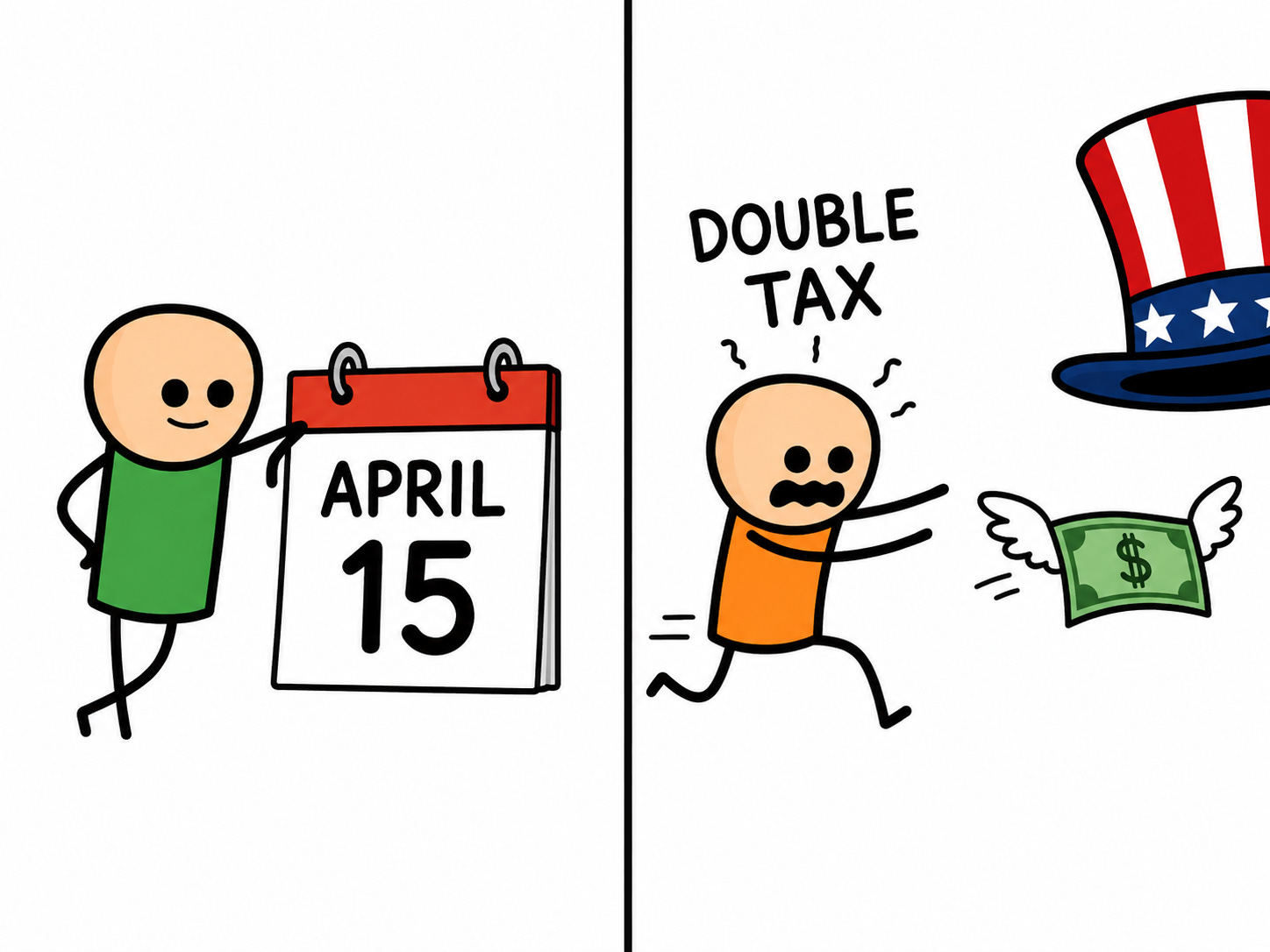
A solo 401k is a sweet setup. You are the employer and the participant, you decide how much to defer, and the plan answers to nobody but you. That control comes with a cost most owners do not appreciate until something goes wrong. When you over-defer in a regular employer plan, there is usually a payroll team, a plan administrator, or a human resources contact watching the numbers and flagging problems. In a solo plan, there is nobody. The excess deferral can sit in the account for months before anyone notices, and by then the most important date has often passed.
That date is April 15 of the year after the over-deferral. It is the hard deadline to fix an excess deferral cleanly. Miss it, and the correction still exists, just at a much higher cost.
A solo 401k has two contribution buckets. The employee deferral, the money you decide to set aside from your own earnings, and the employer profit-sharing contribution, which the business makes on top. The deferral limit is a per-person annual cap that follows you across every 401k you participate in, not a per-plan cap. If you also have a W-2 job with its own 401k, deferrals from both plans combine against the same limit. Even with only the solo plan, you can miscalculate, fund early in the year, and find at tax time that you went over.
The clean correction is a corrective distribution. You direct the plan to distribute the excess deferral plus the earnings it generated, and have the money out by April 15 of the year following the excess. Done that way, the excess is taxed once, as wages in the year you deferred it, and the earnings are taxed in the year they come out. A timely corrective distribution is generally not hit with the early distribution penalty. The matter is closed.
The April 15 deadline is a correction deadline, not the tax-filing deadline. A filing extension moves your return due date but does not move this April 15. The window closes when the date arrives, regardless of your return status.
Now the part this article is actually about. What happens if you do it later instead. A distribution may still happen, but it no longer gets the favorable timely-correction treatment.
First, the excess deferral was already taxable in the year you deferred it. Late correction does not undo that, and on top of it, the same dollars become taxable a second time when the corrective distribution finally goes out, because they no longer qualify for the favorable treatment a timely correction provides. The earnings come out taxable in the year of distribution as well. One excess deferral, two tax events on the same money. That double taxation is mainly a pre-tax deferral issue. Excess designated Roth solo 401k deferrals have their own tax treatment, because the contribution was already taxed going in.
Second, the early distribution penalty becomes a real concern. A timely corrective distribution generally avoids the ten percent additional tax. A late corrective distribution may not. If you are under fifty nine and a half and no exception applies, the ten percent can attach to the corrective distribution on its way out.
There is also a plan-side issue. An uncorrected excess deferral is a technical failure of the plan, and the IRS has a self-correction process that plan sponsors can use after the fact. For a solo plan, the sponsor and the participant are the same person. The plan-side cleanup is a separate track from the participant-side tax math, and it does not change the double-tax outcome.
A self-employed designer automates monthly deferrals into her solo 401k. In November, she realizes the monthly schedule plus a bonus deferral she made in March pushed her past the annual deferral limit by a couple thousand dollars.
Tax season comes. The excess is included in income for the year of deferral. She means to call the custodian about the corrective distribution, but the months get away from her and April 15 passes.
In May, she finally arranges the distribution. The excess and the earnings come out. The excess was already taxed for the year she deferred it, and now, because the distribution is late, the same excess is taxable again in the year it leaves the plan. The earnings are taxable in the year of distribution. Because she is under fifty nine and a half with no applicable exception, the ten percent early distribution penalty may apply to the late distribution. A small problem became a multi-layer tax event.
A solo 401k excess deferral after April 15 sounds dramatic. The reality is a familiar tax mistake with a sharper edge than most, because of who carries the risk. In a regular employer plan, an HR contact or recordkeeper usually catches the problem in time. In a solo plan, that watch role is yours, and the only person who can hit the April 15 deadline is the owner.
What truly matters is understanding the size of the gap between timely and late. Timely, the excess leaves with one round of tax on the excess and one round on the earnings, and the matter is closed. Late, the same excess gets taxed twice, the earnings are taxed when distributed, and an early distribution penalty can attach if the owner is under fifty nine and a half. The cost stops compounding the moment you act. Leaving the excess in the plan lets the damage grow across more years.
Knowing whether April 15 is ahead of you or behind you is the entire test. Ahead, the path is clean. Behind, the path costs more, and it still exists.
I write one of these every day, one retirement rule, explained in plain language and verified against the source. The daily email is free: subscribe here.
Full archive, worksheets, and search live at RetirementNewsRundown.com.
Disclaimer This article is for educational and informational purposes only. It is not tax, legal, or financial advice and does not create an advisor–client relationship. Always consult appropriate professionals regarding your specific situation.