Ending a 401(k) starts with a decision on paper. The company adopts a resolution that sets a termination date, and from that date the plan stops taking contributions, every participant becomes fully vested, and the plan begins paying out. For an owner selling a business, putting that date before the closing lets the seller make the termination decision before the buyer takes control. The paperwork and payouts that follow may still happen after the sale.
The resolution is the easy part. What follows is a list of tasks that runs for months after the champagne, and a clock the IRS uses to judge whether the plan was actually terminated or is still very much alive.
The termination date is generally the date the company’s resolution sets, judged on the facts. For a sale, that date has to fall before the closing to keep the decision with the seller. The plan document is amended to set the date, stop contributions, and authorize the distributions, and it also has to be brought up to date for any changes in the law that apply through the termination date.
From that date, every affected participant is 100% vested, including employer matching and profit-sharing money that would otherwise have been forfeited under the vesting schedule. Affected participants include current employees and former employees who still have balances in the plan.
Contributions the company already owes still have to go in. Deferrals withheld from paychecks before the termination date get deposited, and any employer contribution the plan’s terms called for through that date gets made.
Participants receive notice that the plan is terminating, along with the rollover notice that explains their options for moving the money. The company can also ask the IRS for a determination letter on the plan’s qualified status at termination. That step is optional, and it comes with its own notice requirements to interested parties.
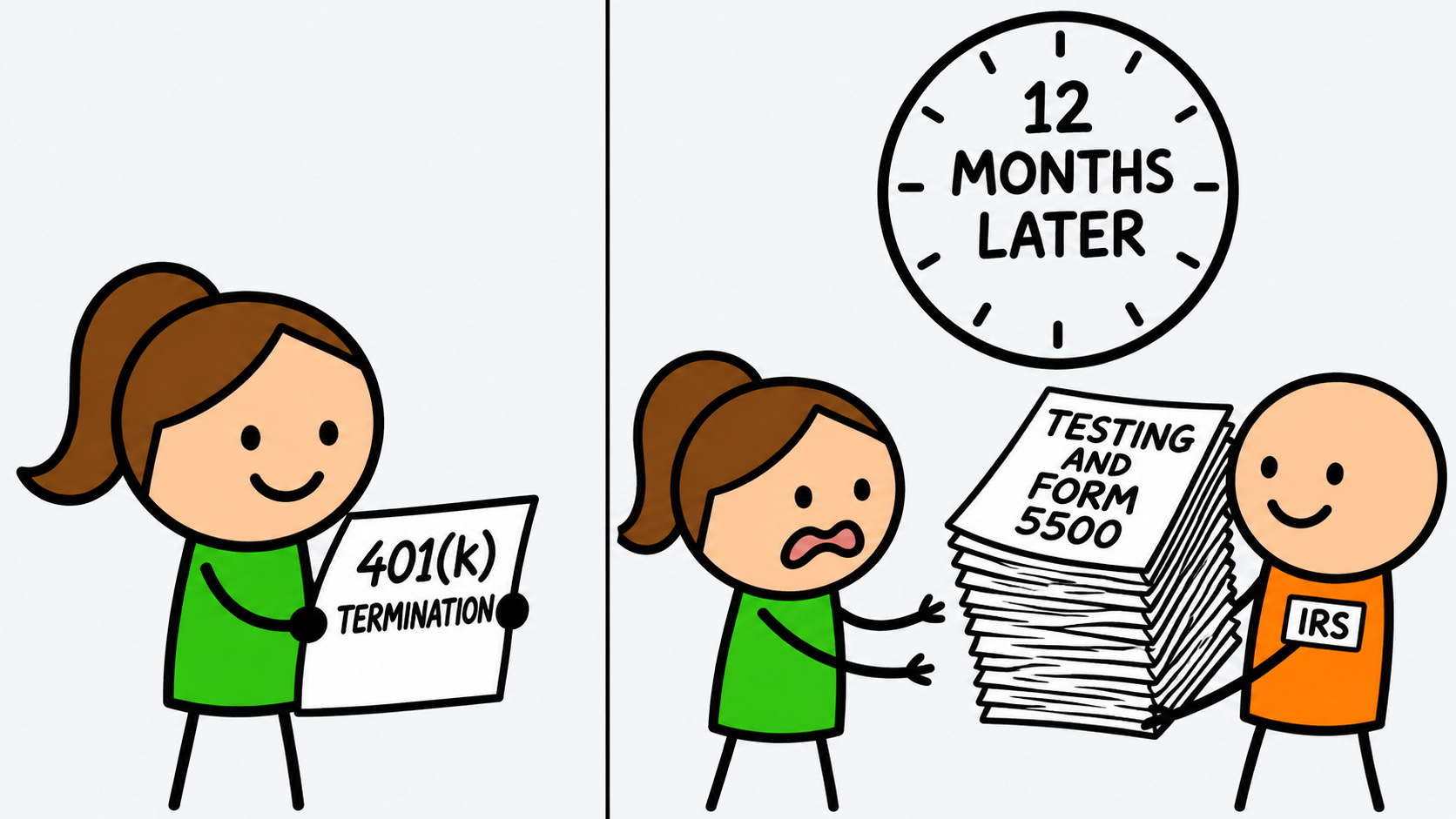
Then comes the payout, and the clock. The IRS expects the assets to be distributed as soon as administratively feasible, which it generally reads as within 12 months of the termination date. Taking longer creates a presumption that the payout was too slow, which can be overcome when the delay comes from events outside the administrator’s control or from waiting on a timely requested IRS determination letter.
What happens if the money is still in the plan after that, with no qualifying reason for the delay? The IRS can treat the plan as never having terminated. An ongoing plan has to keep meeting every qualification requirement, which means amending the document for new laws, keeping up with testing, and filing annual Form 5500 returns until the last dollar leaves. Those obligations end when the assets are paid out.
Participants who cannot be found do not stop the clock. The plan is still expected to distribute their balances, and the IRS has separate guidance on searching for missing participants and where their money can go.
The last task is the final annual return, filed for the plan year in which the final distribution is completed, with the final-return box checked.
In a stock sale, there is one more wrinkle. The company that sponsored the plan now belongs to the buyer, and it is still the sponsor of the terminated plan. The notices, distributions and final return all happen on the buyer’s watch, which is why the purchase agreement is the place to settle who finishes the work and who pays for it.
Grace owns a dental practice organized as an S corporation, with eight employees and a 401(k) whose match vests on a three-year cliff. She agrees to sell the stock to a regional group that runs its own 401(k), with the closing set for September 30.
On September 15, her corporation adopts a resolution terminating the plan effective September 29 and amends the plan to match. The deferrals from the September 26 payroll are deposited. The match owed under the plan’s formula through September 29 goes in.
A hygienist hired 14 months earlier, who had no vested match yet under the cliff schedule, becomes 100% vested on September 29.
In October, participants receive the termination notice and the rollover notice. Distributions go out from December through February. Two former employees do not respond, so the plan follows the missing participant steps and distributes their balances under them.
The last dollar leaves in February, inside the 12-month window. The plan files its final Form 5500 for the plan year that includes February. Grace rolls her own $750,000 balance to an IRA in December.
Had the distributions dragged on past the following September without a qualifying reason for the delay, the IRS could have treated the plan as still running, with all the testing, amendments and annual returns that come with that, under a company Grace no longer owns.
Terminating a plan before a sale puts the decision in the seller’s hands, and the mechanics are well marked: a dated resolution, amendments, full vesting, final contributions, notices, payouts and a final return.
What matters is the date on the resolution, which has to come before the closing, and paying out the assets as soon as administratively feasible, generally within 12 months. A longer unexplained delay can leave the plan subject to every ongoing requirement. For where an owner’s balance can go once the plan pays it out, our rollover IRA guide covers the options.
I write one of these every day, one retirement rule, explained in plain language and verified against the source. The daily email is free: subscribe here.
Full archive, worksheets, and search live at RetirementNewsRundown.com.
Disclaimer
This article is for educational and informational purposes only. It is not tax, legal, or financial advice and does not create an advisor-client relationship. Always consult appropriate professionals regarding your specific situation.