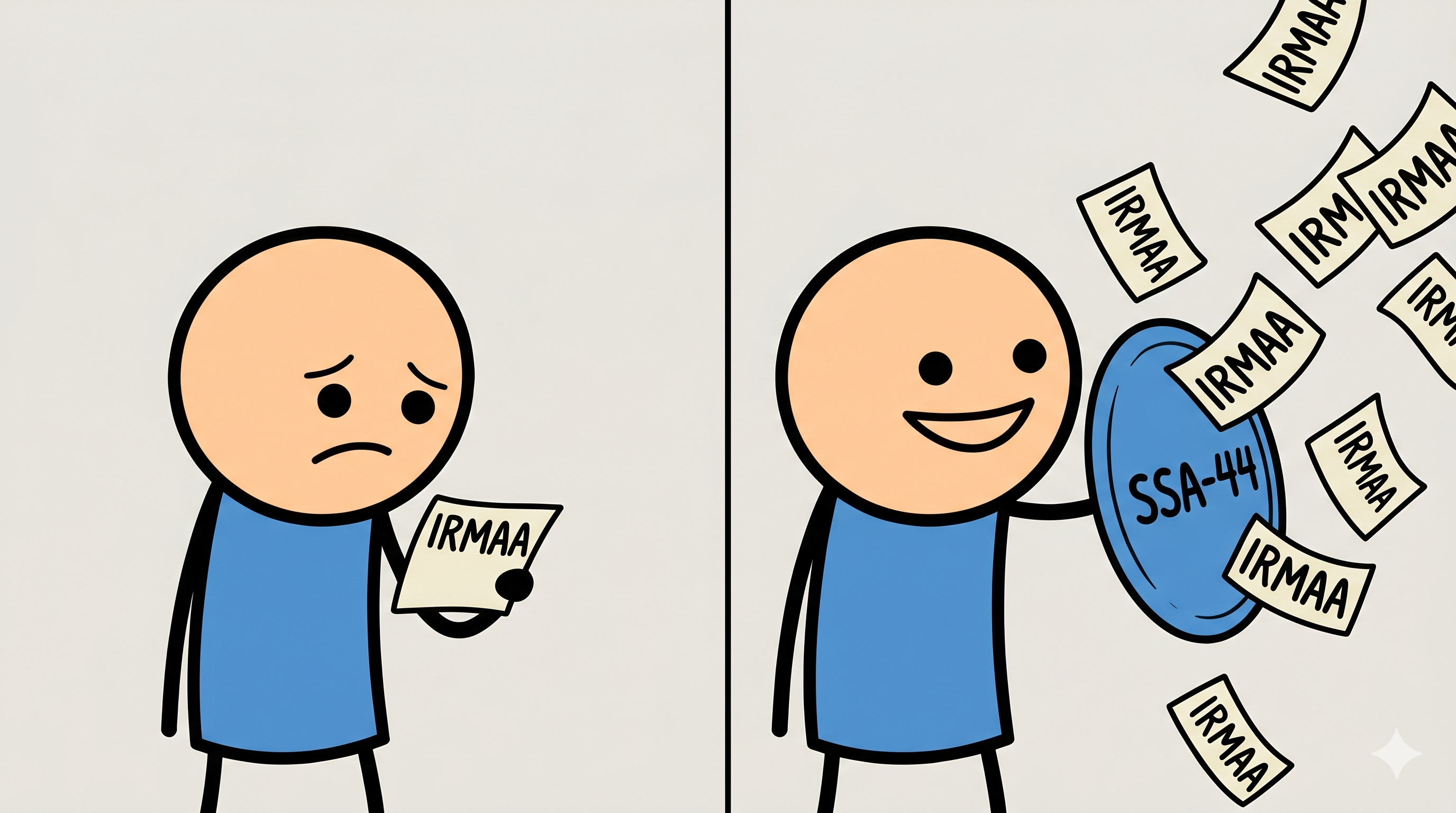
A new Medicare enrollee opens the first premium notice and sees a number well above the standard Part B premium printed in every enrollment brochure. The cause is mechanical. SSA is setting that premium using a tax return from two years before the enrollment year. For most new retirees, the return in question is from a year they were still working full time, often a peak earning year that included a severance package, accumulated paid time off, deferred compensation, or a final-year bonus.
The bill is correct. The calculation is doing exactly what the rules require. The retiree feels blindsided because the timing of the lookback maps a working year onto a retirement year, and the income mismatch is precisely what produces the IRMAA surcharge.
This is the most common version of the IRMAA surprise. The retiree is on a fixed retirement income, and the Medicare premium reflects the income they had while still earning a salary.
When SSA sets an IRMAA determination for an upcoming premium year, the agency uses the most recent federal income tax return on file. In practice, that is the return for the year that ended two calendar years before the premium year begins. If that return has not yet been processed when SSA runs the determination, the agency uses the return for the year before that, then reconciles when the more recent return is processed.
The premium notice arrives in the late autumn before the new premium year begins. The notice identifies which income year SSA used. This is the document where the lookback becomes visible.
The two-year structure means the first Medicare premium year for a new enrollee is typically based on income from the year the retiree turned sixty-three. For someone who retired late in that year, the return reflects nearly twelve months of full earnings plus year-end items that often push MAGI higher than any other return that retiree will ever file. The second Medicare premium year is based on the return for the year the retiree turned sixty-four, which may include a partial year of earnings, severance, deferred compensation distributions, or a Roth conversion strategy executed in the final pre-Medicare window. Both of those years can produce IRMAA assignments based on income the retiree no longer earns.
What happens if the retiree does nothing. The premium remains at the IRMAA-tier level for the full year. SSA will use the next available tax return when setting the following year’s premium. If that next return reflects post-retirement income, the IRMAA tier resets. The lookback works in the retiree’s favor by the same mechanic that produced the original surprise.
What happens if the retiree files Form SSA-44. Work stoppage is one of the qualifying life-changing events listed on the form. Reduced work hours is another. The retiree submits the form with documentation of the LCE and provides an estimate of MAGI for a more recent year. If SSA accepts the filing, the agency makes a new initial determination using the estimated income rather than the two-year-old return.
The deadlines worth keeping straight. The two-year lookback is a calendar mechanic, not a deadline a beneficiary can miss. SSA-44 has no rigid filing window, but the form is most useful when submitted as soon as the premium notice arrives or soon after the life-changing event occurs. If higher premiums have already been paid for months in the affected premium year, an accepted new determination may result in an adjustment or refund, but the practical process takes time. The standard annual recalculation happens automatically when the next tax return is processed and matched to the SSA record.
Consider a worker who retired at the end of the year they turned sixty-three. The retirement year included a full salary, a year-end bonus, a payout of accumulated paid time off, and a distribution from a non-qualified deferred compensation plan. Total MAGI for that year pushed well into an upper IRMAA tier.
Two years later, the worker turned sixty-five and enrolled in Medicare. The first Medicare premium year was based on the high-income retirement-year return. Without filing SSA-44, the retiree paid IRMAA for the full first year of Medicare based on the income earned while still working. The surcharge applied to both Part B and Part D for twelve months.
The following year, SSA used the next available return, which reflected the first full year of post-retirement income. The MAGI was well below the lowest IRMAA threshold, and the surcharge dropped to zero. If no SSA-44 or successful appeal was filed for that premium year, the first-year surcharge was not recovered.
A different version of this same scenario uses SSA-44. The retiree submitted the form shortly after enrolling in Medicare, documented the work stoppage, and provided a MAGI estimate for the post-retirement income year. SSA accepted the filing and issued a new initial determination using the estimate. The first-year Medicare premium reflected post-retirement income rather than working-year income. The surcharge for that year was reduced or eliminated.
The two-year lookback feels punitive when it is actually predictable. The mechanic is the same for everyone, and it resets automatically as newer returns become available. The reason new retirees encounter the IRMAA surprise more often than long-time retirees is the transition-year math, where a working income year is being mapped onto a retirement income year. Once two consecutive returns reflect post-retirement income, the lookback works in the retiree’s favor.
The SSA-44 path is widely available and significantly underused. Work stoppage qualifies. Reduced work hours qualify. Several other life-changing events may qualify, including marriage, divorce or annulment, death of a spouse, loss of pension income, loss of income-producing property, and certain employer settlement payments. The form requires documentation and an income estimate, but the process exists outside the annual tax cycle and can be initiated as soon as the LCE occurs.
What matters is awareness of the timing window, the SSA-44 form, and the fact that the IRMAA assignment for any given year is a single-year outcome based on a single tax return. The lookback is mechanical, the recalculation is automatic, and the appeals path is available when the lookback no longer reflects current income.
I write one of these every day, one retirement rule, explained in plain language and verified against the source. The daily email is free: subscribe here.
Full archive, worksheets, and search live at RetirementNewsRundown.com.
Disclaimer
This article is for educational and informational purposes only. It is not tax, legal, or financial advice and does not create an advisor–client relationship. Always consult appropriate professionals regarding your specific situation.