Medicare Part A has a feature most people never notice because it works in their favor. When someone signs up for premium-free Part A after turning 65, or applies for Social Security, the coverage generally reaches back up to six months, though never earlier than the month they first became eligible. For hospital bills, that retroactive coverage is a gift.
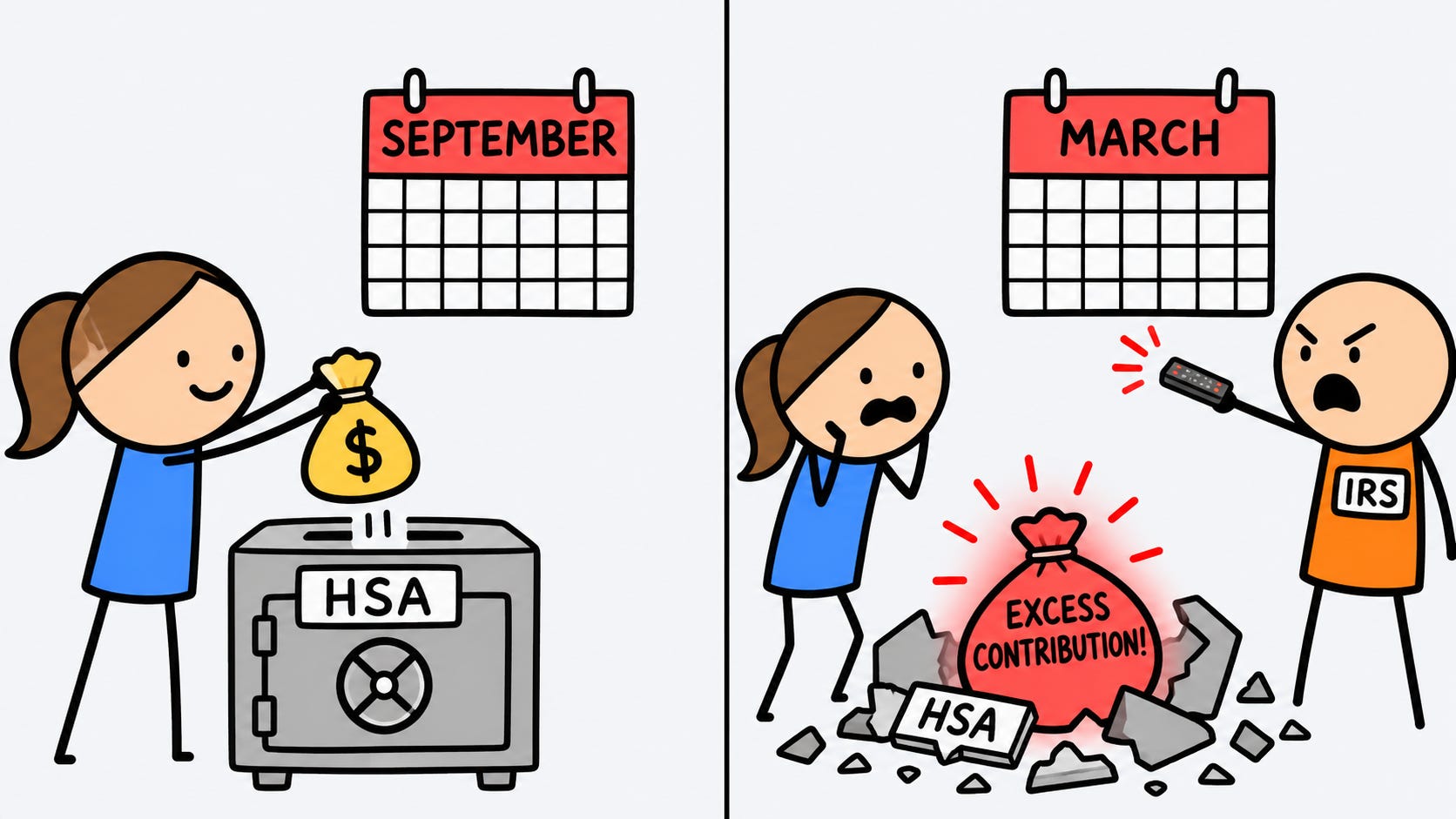
For anyone still putting money into a health savings account, it can turn ordinary contributions into excess contributions after the fact. The paychecks already went out, the HSA deposits already went in, and then a Medicare start date lands months earlier than the person expected.
The basic rule is short. Nobody can contribute to an HSA for a month they are enrolled in Medicare. Medicare’s own handbook says it directly, and an IRS letter on the subject says there are no exceptions for retroactive coverage. Once Part A coverage exists for a month, even coverage granted later and backdated, that month is off limits for HSA contributions.
The six-month reach-back is what catches people. Someone who works past 65 with a high-deductible health plan through an employer can keep contributing to an HSA, as long as they have not enrolled in any part of Medicare. The moment they apply for Part A, or for Social Security, which brings Part A along automatically, the Part A start date is generally set up to six months before the application month, though never earlier than the month they turned 65.
Medicare’s handbook spells out the timing. For someone who signs up six or more months after turning 65, the way to avoid a tax problem is to stop HSA contributions six months before the month they apply. For someone who signs up less than six months after turning 65, the coverage reaches back to the month they turned 65, so contributions have to stop the month before that.
The annual HSA limit is figured month by month for anyone who is eligible for only part of the year. Each month of Medicare coverage removes that month’s share of the annual limit. Contributions from both the employee and the employer count against the same limit.
What happens to contributions that land in the retroactive months? They become excess contributions. The IRS allows excess contributions and their earnings to be withdrawn without the 6% excise tax by the tax-return due date, including extensions. Someone who filed a timely return without removing the excess may also qualify for a special six-month correction period by withdrawing the money and amending the return. Excess left in the account after the applicable window faces a 6% excise tax each year it remains, figured on the smaller of the excess or the account’s year-end value. The withdrawn excess also loses its tax break, so it ends up as taxable income.
So the clocks run separately. The Medicare application date sets the Part A start date, which reaches back up to six months. The HSA contribution limit runs on the calendar year, month by month. The fix for an excess runs to the tax-return due date, including extensions, with the special six-month period available after a timely filed return. After that, the 6% tax can repeat each year until the excess is gone.
Carol turns 65 in March and keeps working, covered by her employer’s high-deductible plan. She contributes $350 a month to her HSA through payroll and skips Medicare for now, which her employer coverage allows.
The next September, at 66, she retires and applies for Social Security and Medicare in the same month. Because she applied more than six months after turning 65, her Part A coverage reaches back six months and starts in March of that year.
In the first version, Carol keeps her payroll contributions going right up to her last day. For the year, she contributed $2,800 from January through August. Only January and February count as eligible months. Using a $5,400 annual limit for illustration, which includes the extra catch-up amount for people 55 and older, her limit for the year is two-twelfths of that, or $900, so $1,900 is excess. She asks her HSA custodian to withdraw the excess and its earnings before her return’s due date, including extensions. The excess is taxable income, the earnings are taxable, and there is no 6% excise tax.
In the second version, Carol planned for the reach-back. Knowing she would apply in September, she stopped HSA contributions after February. Her two months of contributions fit inside her limit, the Medicare start date in March changes nothing, and there is nothing to correct.
Had Carol left the $1,900 in the account beyond the applicable correction window, the 6% tax would generally cost $114 for that year, assuming her HSA held at least $1,900 at year-end. The tax can repeat in later years while the excess remains, subject to the account’s year-end value.
The reach-back comes from two systems running on different calendars. Medicare backdates coverage to protect people from gaps, and the HSA rules look at every month that coverage touches. The fix for an overlap is a withdrawal, and the money already in the HSA can still be spent on qualified medical expenses tax free after Medicare starts.
What matters is the date of the Medicare or Social Security application, counted back six months. For how Part A, Part B and the enrollment windows fit together for people who work past 65, our Medigap guide covers the coverage side of the switch.
I write one of these every day, one retirement rule, explained in plain language and verified against the source. The daily email is free: subscribe here.
Full archive, worksheets, and search live at RetirementNewsRundown.com.
Disclaimer
This article is for educational and informational purposes only. It is not tax, legal, or financial advice and does not create an advisor-client relationship. Always consult appropriate professionals regarding your specific situation.