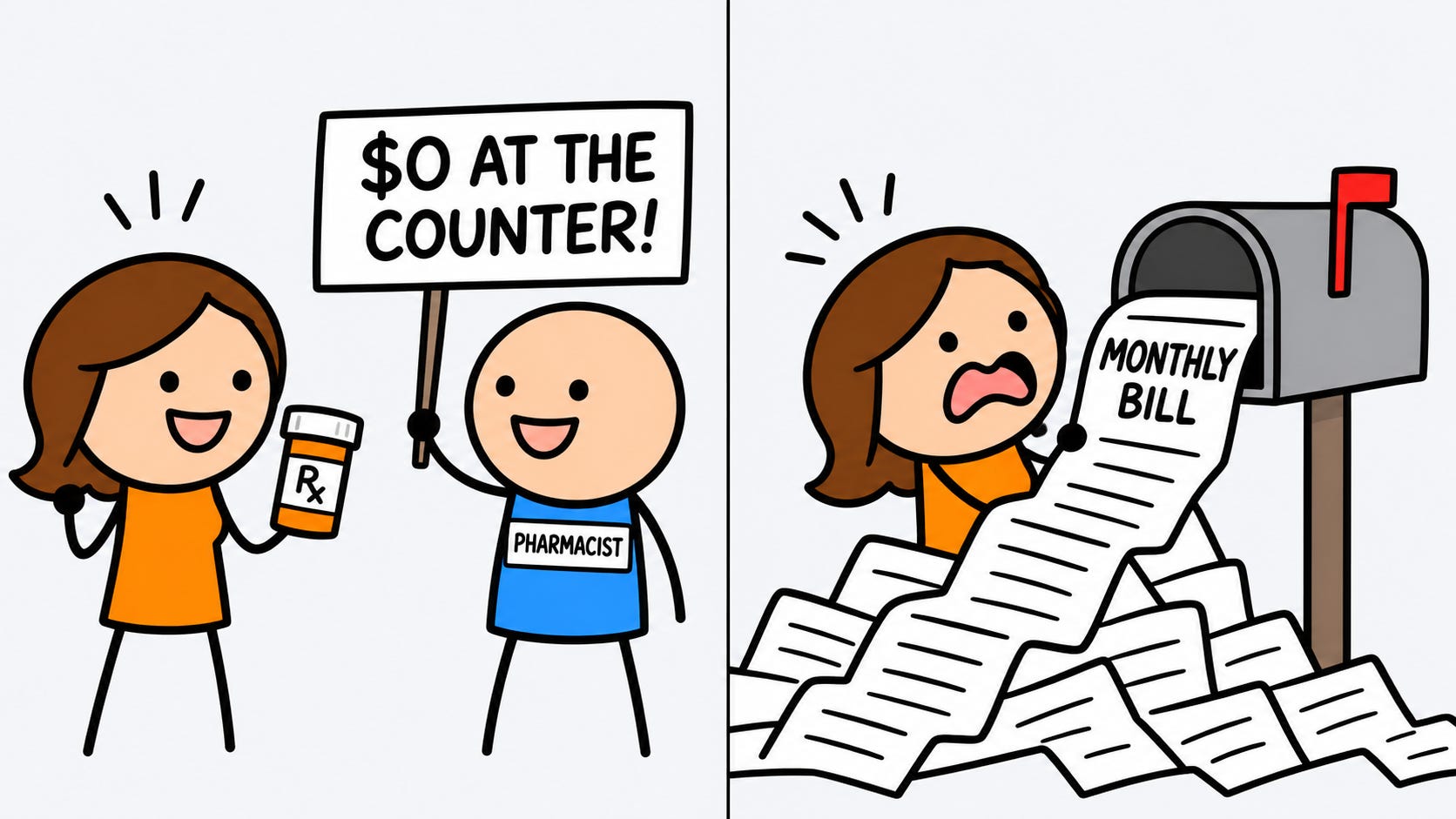
Medicare drug coverage now caps what a person pays out of pocket for covered drugs in a calendar year. Once someone’s out-of-pocket costs for covered drugs reach the cap, the rest of the year costs nothing at the pharmacy counter. The cap is a real protection, and it comes with a cash-flow problem. A person on an expensive drug can hit the entire year’s cap in January, in one or two pharmacy visits, and pay it all before the month is out.
Every Part D plan offers a way to spread that bill across the year. It is called the Medicare Prescription Payment Plan, and how much it helps depends almost entirely on when someone joins.
The payment plan changes how drug costs are paid, and the amount stays the same. Someone enrolled pays $0 at the pharmacy for covered drugs, and the drug plan sends a monthly bill instead. The total paid over the year is the same as it would have been at the counter. Medicare’s own fact sheet is direct about it: the option might help manage expenses, but it does not save money or lower drug costs. There is no interest and no fee for late payments.
The monthly bill has a ceiling, and the ceiling depends on how many months are left in the year. In the first month, the maximum is the annual out-of-pocket cap minus what the person has already spent on covered drugs that year, divided by the months remaining. The actual bill is the smaller of that ceiling or the drug costs added after enrollment. In later months, the remaining unpaid balance plus new costs is divided across the months left in the year. Joining early spreads the costs over more months. Joining late compresses them.
Anyone in a Part D plan can join before the year starts or in any month during it. Joining during open enrollment sets it up for January 1. Someone already in the payment plan who stays in the same drug plan is renewed automatically for the next year. Someone who switches drug plans during open enrollment is starting over with a new plan and would need to opt in there.
What happens if a bill goes unpaid? The plan sends a reminder, and Medicare’s rules require a grace period of at least two months. If the balance still is not paid, the person can be removed from the payment plan. They keep their drug coverage, because a plan cannot drop someone from Part D over an unpaid payment-plan bill. The drug premium is a separate bill, though, and missing that one can cost the coverage. A plan can also refuse to let someone back into the payment plan the next year while an overdue balance remains.
Leaving is always allowed. Someone can opt out at any time by contacting the plan. Whatever is still owed can be paid all at once or through continued monthly bills. New prescription costs go back to being paid at the pharmacy.
The option is a poor fit for some people. Medicare says it may not be the best choice for people who get or qualify for Extra Help, including through a Medicare Savings Program. People whose drug costs are low, or about the same every month, gain little from spreading them out. The people it helps are the ones whose costs land early and in a lump.
So the clocks look like this. The out-of-pocket cap runs on the calendar year and resets every January 1. Enrollment in the payment plan is open in any month, but every month that passes before joining is one fewer month to spread costs across. The grace period for a missed bill is at least two months. None of this involves a tax deadline or a penalty.
Ruth has Original Medicare and a Part D plan, and she takes a specialty drug that will run her out-of-pocket costs up to the yearly cap on her first fill each January. Using a $2,400 cap for illustration, that means a $2,400 pharmacy bill in January and nothing for covered drugs the rest of the year.
In the first version, Ruth opts into the payment plan during open enrollment. In January she pays $0 at the pharmacy. Her first monthly bill is capped at $2,400 divided by 12 months, or $200, and the same math holds through December. She pays $2,400 over the year, $200 at a time.
In the second version, Ruth skips it and pays $2,400 at the pharmacy in January. Joining in February would do nothing for her, because there is nothing left to spread.
In the third version, Ruth’s costs are low until her doctor starts the specialty drug in October, and the first fill hits her cap all at once. If her enrollment is effective before that fill, the $2,400 is spread over the three months left, October through December, so her bills run about $800 a month. It helps, but much less than starting in January would have.
In every version, Ruth pays the same $2,400. Only the timing changes.
The payment plan is a budgeting tool, and it is honest about being one. It does not reduce what anyone pays, it does not risk the drug coverage itself, and it can be dropped at any time. For someone whose drug costs arrive in a January lump, joining before the year starts turns one large pharmacy bill into twelve smaller ones.
What matters is when the big costs land and how many months are left to spread them. For the rest of what can and cannot change during open enrollment, our Medigap guide is the starting point for how Medicare coverage choices fit together.
I write one of these every day, one retirement rule, explained in plain language and verified against the source. The daily email is free: subscribe here.
Full archive, worksheets, and search live at RetirementNewsRundown.com.
Disclaimer
This article is for educational and informational purposes only. It is not tax, legal, or financial advice and does not create an advisor-client relationship. Always consult appropriate professionals regarding your specific situation.