The IRS runs a correction program for IRAs, the IRA Compliance Resolution System, built for the mistakes custodians and advisors make with other people’s accounts. Its one current piece is the IRA Voluntary Correction Program: the custodian or the owner files with the IRS, the IRS issues a compliance statement spelling out the fix, and completing that fix can remove the tax consequences the mistake caused, within the relief granted and the normal refund deadlines. Before this, an IRA owner hit by someone else’s error was mostly left with paying the tax, requesting a private letter ruling, or hoping a narrow waiver happened to fit.
The program accepts submissions starting May 1, 2027. It is also narrower than the name suggests, which is the first thing anyone hoping to use it runs into.
The program covers exactly four kinds of mistakes, and the IRS has said it will not consider anything else for now.
A missed RMD caused by a service provider’s error. The custodian distributes the missed amounts, with earnings, for every year that fell short, and the IRS can waive the excise tax.
The wrong kind of IRA. The owner asked a provider for one type of account, say a traditional IRA, and got a Roth IRA or a non-IRA account instead. The money moves, with earnings, into the right type of IRA, which is treated as having existed from the original date.
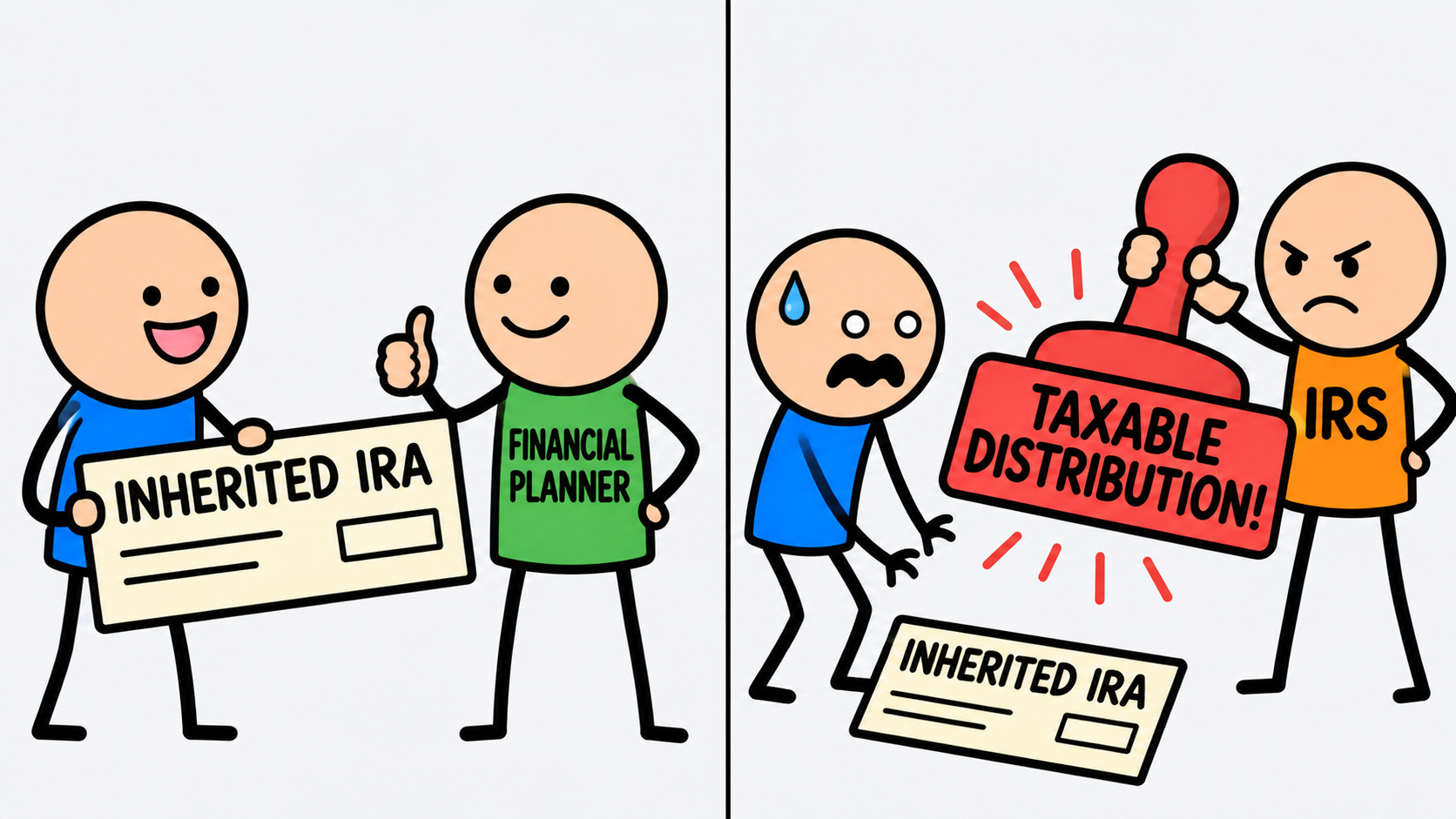
A nonspouse beneficiary who was steered into a taxable distribution. A beneficiary was told by a provider that a check from the decedent’s IRA could be rolled over, when only a direct transfer to an inherited IRA works. The beneficiary puts the money into a new inherited IRA, and the IRS treats it as if the transfer had been done properly.
A missed 60-day rollover deadline, for distributions from IRAs and from employer plans, where enforcing the deadline would be against equity or good conscience. This is the only one of the four that does not require a provider’s mistake. After a one-year overlap, waiver requests that used to go through the private letter ruling process are expected to come only through this program. The free self-certification letter and the automatic waiver both remain available.
The RMD and wrong-account failures require that the provider had procedures in place, followed them routinely, and slipped. The beneficiary failure requires evidence of the provider’s mistaken advice or action. The program also excludes anything egregious, any misuse of IRA assets, and anything tied to an abusive tax shelter. The program does not fix ordinary excess contributions, missed RMDs the owner caused personally, or plan-level failures in a SEP or SIMPLE IRA plan, which go through the employer plan correction program. There is no self-correction route for IRAs.
The custodian or the IRA owner can file, except that a 60-day request has to come from the owner. Filing goes through Pay.gov with a user fee that the IRS sets each year in its annual employee plans procedure, $3,500 for a single submission at launch. A custodian filing on behalf of owners has to notify each one and get their consent to be included. An owner whose return is under IRS examination generally cannot use the program, and every owner in a submission must be caught up on tax filings.
Relief from the related penalties is available “in appropriate cases” and only when it is tied to the failure being corrected. The IRS can decline to pursue the 10% early withdrawal penalty if the money goes back into the IRA with earnings, waive the excise on the missed RMD, and decline to pursue the 6% excess contribution tax that a botched beneficiary rollover can cause. Each has to be requested in the submission.
What happens if the fix comes later? Three clocks run.
The wrong-type-of-IRA failure has its own deadline: the submission has to arrive by December 31 of the year after the incorrect account was opened. After that, the IRS will not accept it.
Refunds follow the normal refund window, generally three years from filing the return or two years from paying the tax, whichever ends later. Filing with the program does not stop that clock. A year that closes while the submission is pending gets no refund unless the owner filed a protective claim. The correction itself can still go through for a closed year, but the tax already paid stays paid.
Once the IRS issues a compliance statement, the correction has to be completed within 90 days, or 150 for a group submission.
Tom inherits his aunt’s traditional IRA, worth $200,000. In October, a financial planner tells him to have the custodian send him a check that he can roll into an inherited IRA, and he does. A nonspouse beneficiary cannot roll over a check at all. Only a direct transfer into an inherited IRA works, so the whole $200,000 is a taxable distribution. The custodian issues a 1099-R, and the following April Tom files his return reporting $200,000 of taxable income and pays the tax.
He learns about the program the next year. His submission includes the planner’s emails, which are the evidence that he relied on a provider’s error. Once the compliance statement arrives, he contributes the amount to a new inherited IRA, adjusted for earnings and reduced by any RMDs the inherited IRA would have required. The original distribution becomes a nontaxable transfer.
The refund needs an amended return. Because he filed his return the April after the distribution, he has three years from that filing to claim it. If the IRS processing is still running as that date approaches, a protective claim keeps the refund available. Had he found out after the window closed, he could still rebuild the inherited IRA, and the amount he put back would count as basis, but the tax he paid would not come back.
This program is a useful tool for a small set of mistakes, and most of what matters is whether the mistake fits one of the four. Everything else in the IRA world keeps its existing fixes: withdrawing an excess contribution by the return due date with extensions, the Form 5329 waiver request for a missed RMD, and the self-certification letter for a late rollover.
For the four that fit, the dates are what count. They are the year-after deadline for the wrong type of account, the refund window on the return, and the 90 days after the compliance statement. For beneficiaries working out what RMDs an inherited account would have required along the way, our inherited IRA calculator can help estimate them.
I write one of these every day, one retirement rule, explained in plain language and verified against the source. The daily email is free: subscribe here.
Full archive, worksheets, and search live at RetirementNewsRundown.com.
Disclaimer
This article is for educational and informational purposes only. It is not tax, legal, or financial advice and does not create an advisor-client relationship. Always consult appropriate professionals regarding your specific situation.