FERS employees who retire before 62 can get an extra monthly payment on top of their basic annuity, the annuity supplement. It is built to cover the gap until Social Security can start, and it is figured the way Social Security would figure a benefit at 62, scaled to the years worked under FERS. For someone retiring at 57 with 30 years, it can be a real chunk of the monthly check.
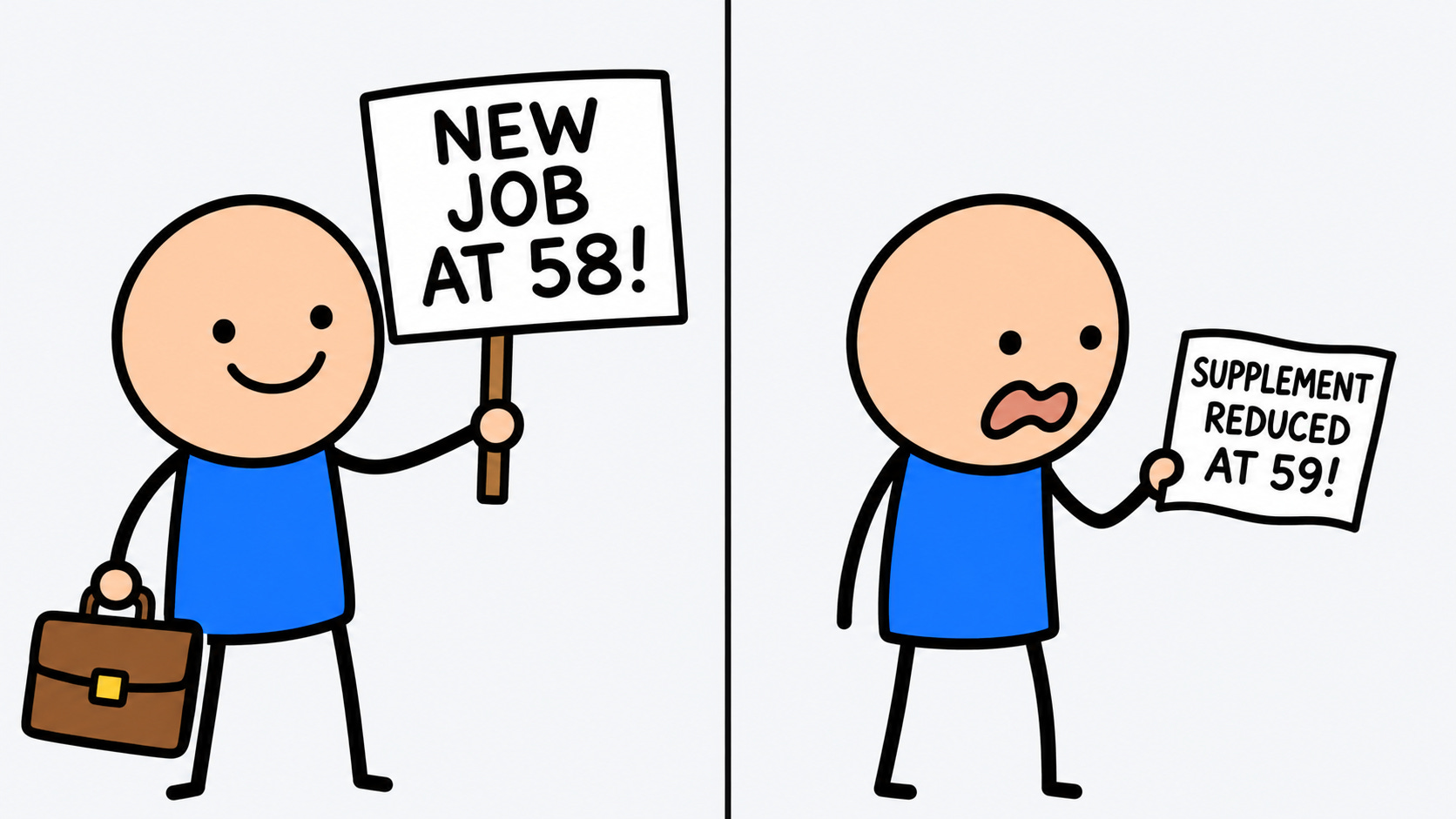
The supplement comes with a condition that the basic annuity does not have. It is subject to an earnings test, the same idea Social Security applies to early claimers. Retirees who go back to work after leaving federal service tend to discover this a year after they start the new job, when the supplement shows up smaller.
The supplement goes to FERS retirees who leave on an immediate annuity before 62 with at least one full calendar year of FERS service: those retiring at their minimum retirement age with 30 years, at 60 with 20, and under the special provisions for law enforcement officers, firefighters and air traffic controllers. The minimum retirement age falls between 55 and 57 depending on birth year. People who retire early through an involuntary or early-out retirement before their minimum retirement age become eligible for the supplement only once they reach it. Retirees under the MRA plus 10 provision get no supplement at all, and neither do disability retirees, people taking a deferred annuity, or anyone retiring at 62 or later.
OPM estimates the Social Security benefit the retiree would get at 62 and multiplies it by FERS years of service divided by 40. Thirty years of FERS service means three quarters of that estimate. The supplement stops at the end of the month in which the retiree legally turns 62, which OPM counts as the day before the birthday. For most people that is the birthday month. Someone born on the 1st legally turns 62 on the last day of the prior month, so the supplement ends a month earlier.
The earnings test counts only earned income: wages from a job and net earnings from self-employment, including overtime, bonuses, severance and deferred pay. TSP withdrawals, the FERS annuity, Social Security, investment income and other retirement payments do not count. Neither does anything earned before the retirement date.
The limit is the same annual exempt amount Social Security uses for its own earnings test before full retirement age, and it rises most years. For every $2 earned above it, the supplement drops by $1. The reduction can never exceed the supplement payable that year, so heavy earnings can zero out the supplement but never touch the basic annuity.
Timing is where the surprise comes from. The test runs one year behind: earnings in one calendar year reduce the supplement paid in the next. OPM sends an annual earnings survey to retirees who have reached their minimum retirement age and are receiving the supplement, and the reported earnings drive the following year’s reduction. A retiree who earned under the exempt amount generally does not need to return the survey, unless the supplement was reduced in an earlier year.
Retirees under the special provisions for law enforcement officers, firefighters, air traffic controllers and military reserve technicians are exempt from the earnings test until they reach their minimum retirement age. A firefighter who retires at 50 can work a second career until that age with no reduction at all.
What happens if the work comes later? Because each year’s earnings hit the next year’s supplement, the timing shifts the cost. Earnings in the year someone turns 61 reduce the supplement paid in the year they turn 62, which runs only through the birthday month, and the cap limits the reduction to what is payable in those months. Earnings in the year someone turns 62 have no supplement left to reduce.
Diane retires at 57, her minimum retirement age, with 30 years of FERS service at the end of March. OPM estimates her Social Security at 62 at $1,800 a month, so her supplement is $1,350 a month, or $16,200 a year. Her salary from January through March does not count for the earnings test.
She starts a part-time job in May. For illustration, suppose the exempt amount is $24,000. If she earns $20,000 in wages for the rest of that year, she is under the limit, and next year’s supplement stays at $16,200.
The next year, at 58, she works the full year and earns $40,000. That is $16,000 over the exempt amount, so the supplement paid the following year, when she is 59, drops by $8,000 to $8,200. Her basic annuity does not change.
If she earned $60,000 instead, the excess would be $36,000 and the reduction $18,000. The cap holds it to $16,200, so she would receive no supplement that year and her full basic annuity.
Rick, a FERS firefighter, retires at 50 with 25 years and takes a job paying $70,000. His supplement is untouched until he reaches his minimum retirement age. From then on, his earnings are tested the same way as Diane’s.
The supplement is a bridge to 62, and the earnings test decides how much of it a working retiree keeps. The basic annuity, TSP withdrawals and investment income sit outside the test. What matters is earned income after the retirement date, compared against Social Security’s yearly limit, one year in arrears.
The dates worth tracking are the minimum retirement age, when the test starts for special category retirees, the annual earnings survey, and the end of the month the retiree legally turns 62, when the supplement and the test both end. The TSP side of retiring early, including the age-55 separation rule that lets many of these retirees draw on the TSP without the 10% penalty, is covered in the TSP’s age-55 exception and how a rollover can erase it.
I write one of these every day, one retirement rule, explained in plain language and verified against the source. The daily email is free: subscribe here.
Full archive, worksheets, and search live at RetirementNewsRundown.com.
Disclaimer
This article is for educational and informational purposes only. It is not tax, legal, or financial advice and does not create an advisor-client relationship. Always consult appropriate professionals regarding your specific situation.