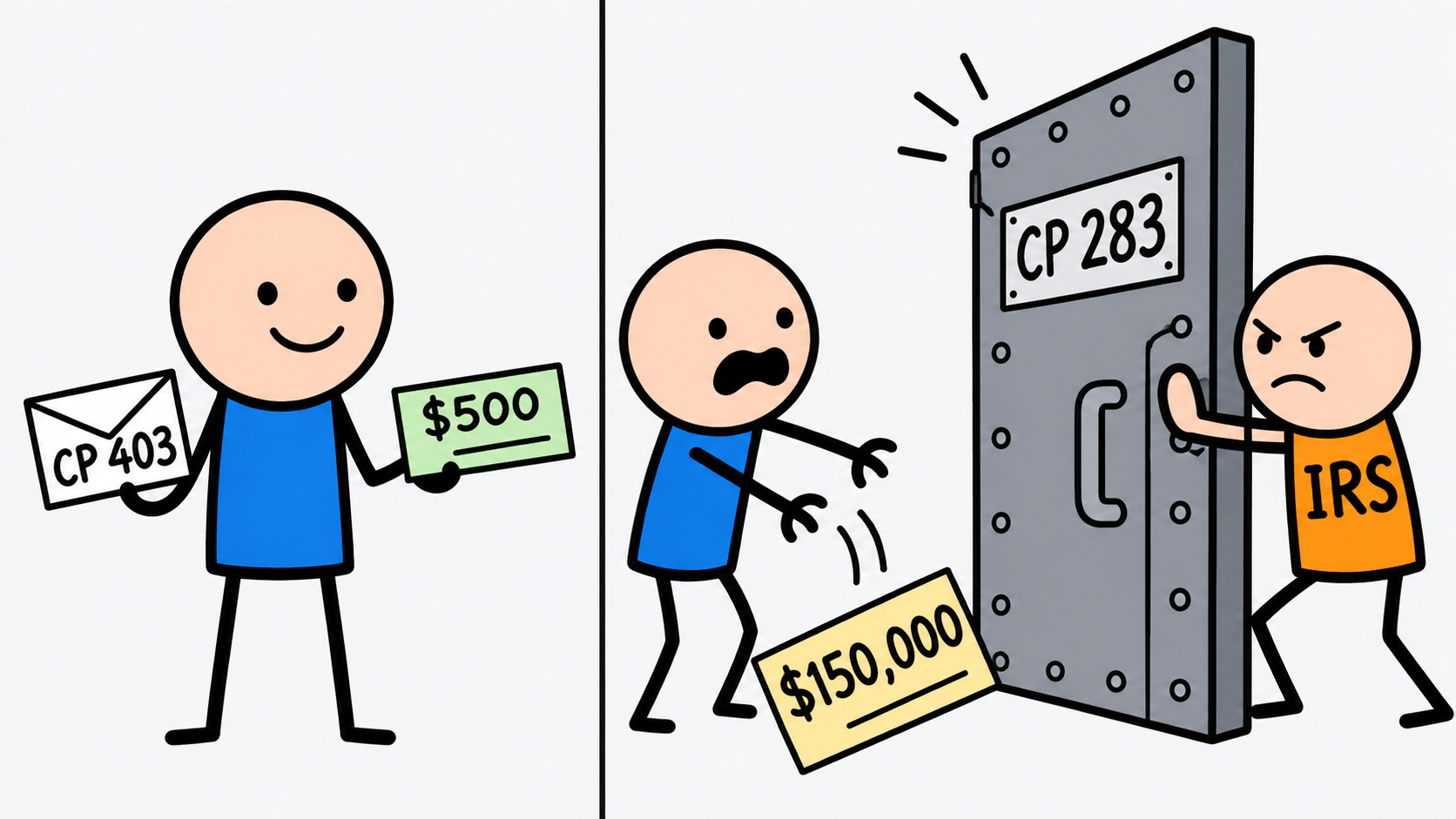
A solo 401(k) that ends the year above $250,000 owes Form 5500-EZ, and the penalty for skipping it is $250 a day, up to $150,000 per plan year. Owners usually find out they missed it years later, from an accountant, a new custodian, or an IRS letter, and by then the math looks like a mortgage.
The IRS runs a standing program for exactly this situation. Owners of one-participant plans can file the missing returns late, pay a small flat amount, and have the late filing penalties waived. The catch is a single notice that, once it arrives, closes the door for that year.
The program covers one-participant plans, meaning plans that cover only the owner, or the owner and spouse, or partners and their spouses, along with certain foreign plans. Plans that cover employees beyond the owners fall under the Labor Department’s reporting rules and use its separate delinquent filer program instead.
The cost is $500 for each late return, capped at $1,500 for a single submission covering three or more returns for the same plan. One missed year costs $500, two cost $1,000, and three missed years cost the same $1,500 as ten. Each plan goes in its own package, so an owner with two late plans pays for each.
The submission is paper only. That surprises owners who normally have to file electronically, but returns sent to the Labor Department’s EFAST2 system are not treated as part of the program. Each missing year gets its own complete Form 5500-EZ, using the form version for that plan year. Each return is marked as filed under the program, either by checking the box on the form for it or with a notation at the top. A Form 14704 transmittal goes on top of the package, along with a check payable to the United States Treasury, and the whole thing is mailed to the IRS in Ogden, Utah.
The program waives the late filing penalties for the returns in the submission. Asking for reasonable cause relief is a separate route, and the IRS says not to request it as part of a program submission.
What happens if the return comes in later? The cutoff is a specific notice. Once the IRS issues a CP 283 notice assessing a penalty for a missing return, the program is no longer available for that return. Earlier IRS letters asking about a missing return, the CP 403 and CP 406 delinquency notices, do not disqualify anyone. An owner who mistakenly filed a late return through EFAST2 can still send a paper submission under the program, as long as no CP 283 has gone out.
After a CP 283, the remaining option for that year is to ask for the penalty to be waived for reasonable cause, which the IRS decides case by case and can deny.
Marcus has run a solo 401(k) for his consulting firm for nine years. The plan first ended a year above $250,000 four years ago and has stayed above it since. He never filed a 5500-EZ, because nobody told him the obligation existed. Three returns are past due, and last year’s is not due until July.
His new accountant spots the gap in February. By then the first missing return is more than two and a half years late, long enough to reach the $150,000 cap on its own. The second and third are past due as well. Together the penalty exposure is well into six figures.
Two weeks later, a CP 403 letter arrives asking about the missing return for the first year. That letter does not disqualify him.
The returns need each year’s plan values, so the accountant pulls the custodian’s year-end statements for all three years. He then prepares three paper 5500-EZs, each on the form version for its plan year and marked as filed under the program, with Form 14704 on top. Marcus mails the package with a $1,500 check. The three years of exposure are resolved for $1,500.
Last year’s return, and every one after it, goes through the regular process by the normal deadline, electronically if his business files enough returns to require it.
Had he waited until a CP 283 arrived for the first year, that year would fall outside the program, leaving only a reasonable cause request against a five- or six-figure assessment.
The 5500-EZ penalty looks catastrophic on paper, and the relief program exists to keep a forgotten form from becoming a financial disaster. For most owners who find the problem themselves, a missed filing costs $500 to $1,500 and some paperwork.
What matters is timing and format: the paper submission has to go in before a CP 283 is issued for that year, and electronic filing does not count. Earlier letters asking about the return leave the program open. For how the $250,000 trigger and the final-year return work in the first place, our breakdown of when a solo 401(k) crosses $250,000 and the 5500-EZ kicks in covers the filing rules.
I write one of these every day, one retirement rule, explained in plain language and verified against the source. The daily email is free: subscribe here.
Full archive, worksheets, and search live at RetirementNewsRundown.com.
Disclaimer
This article is for educational and informational purposes only. It is not tax, legal, or financial advice and does not create an advisor-client relationship. Always consult appropriate professionals regarding your specific situation.