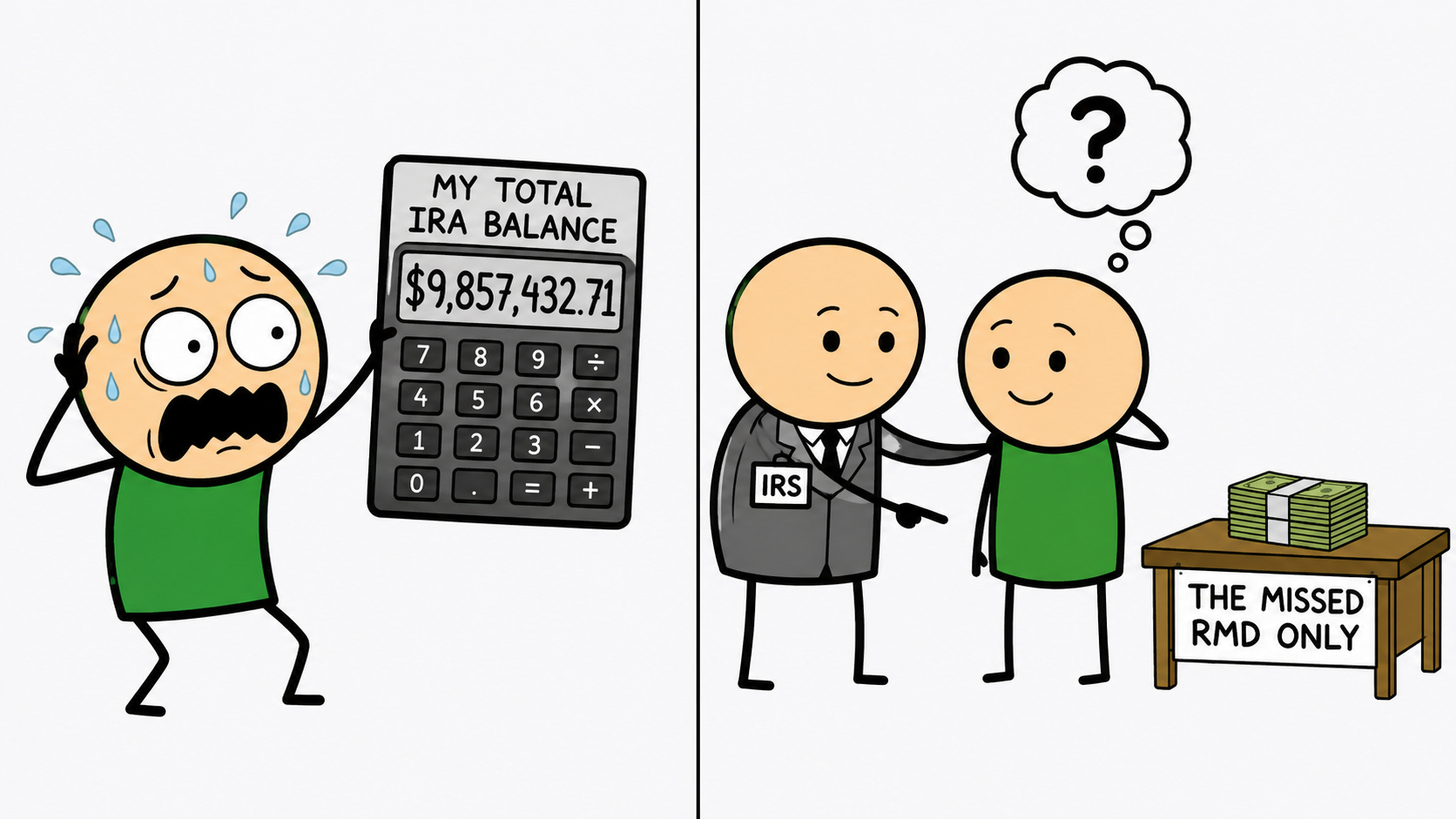
A required distribution deadline passes without the money coming out, and the account owner discovers it weeks or months later. The first reaction is usually panic driven by a number they half remember, some steep percentage attached to missing a required distribution. That percentage is real, but it attaches to a much smaller figure than most people fear, and the law now builds in a specific path to shrink it further. Knowing how that path works turns a frightening mistake into a manageable filing.
Missing a required minimum distribution triggers an excise tax on the shortfall. The shortfall is the gap between what should have come out and what actually did, so a person who took part of the required amount owes the tax only on the piece they missed, and a person who took nothing owes it on the full required amount. The tax does not touch the account balance. It applies only to the distribution that failed to happen.
The current rate on that shortfall is twenty five percent. From there, two separate forms of relief exist, and they are genuinely separate even though people tend to mash them together.
The first is a statutory reduction. If the account owner takes the missed amount out during the correction window and files the reporting form correctly, the rate can drop from twenty five percent to ten percent. This is not the same as asking for a discretionary waiver. It is the reduced rate built into the current penalty structure, available to someone who corrects in time and reports it properly.
The second is a full waiver down to nothing, and this one is discretionary. It requires showing that the missed distribution happened because of reasonable error and that the account owner is taking reasonable steps to fix it. This is requested on the same reporting form by following the waiver instructions and attaching a short statement explaining the error and the corrective steps taken. The agency has historically granted these waivers with some regularity when the miss was an honest one and the correction was prompt, but the outcome is a decision the agency makes, not a rate the taxpayer simply claims.
The correction window is often described as two years, which is close enough for planning but not the full definition. It starts when the missed-distribution tax is imposed and generally ends at the earliest of two events, either the agency mails a notice about the tax or the last day of the second tax year that begins after the year the tax was imposed. The useful version is simpler. Correct quickly, because a notice can close the window earlier than expected.
Consider someone with a required amount of twenty thousand dollars for the year who simply forgot and took nothing by the deadline. The panic number in this person’s head is twenty five percent of a large IRA balance, which would be a catastrophe. That is not the figure. The tax applies to the twenty thousand dollar shortfall, not the account. At twenty five percent that is five thousand dollars.
Now the correction path. This person discovers the miss a few months into the following year, well inside the correction window. Withdrawing the full twenty thousand now and filing the reporting form reflecting the reduced rate drops the tax from five thousand to two thousand, the ten percent figure.
If the same person also had a genuine reasonable cause, an extended illness or a custodian error that caused the miss, the person can go further and request the full waiver on the form, following the waiver instructions and attaching the explanation. If the agency accepts it, the two thousand becomes zero. If the agency declines the waiver, the reduced-rate calculation may still be available if the miss was corrected inside the correction window and the filing was handled properly. Requesting the waiver does not require giving up the correction the person already made.
The move that governs every good outcome here is speed. Taking the missed amount out the moment it surfaces does two things at once. It puts the correction inside the window that makes the reduced rate available, and it strengthens any reasonable cause request by demonstrating the prompt remedy the agency looks for. The reporting belongs to the year of the missed distribution even if the correction happens later, so the form year and the filing workflow both matter and are worth confirming with a tax professional.
Waiting is the only real way to lose here. The window can close on its own timeline, a mailed notice can close it early, and a shortfall left uncorrected past the window sits at the full rate with the discretionary waiver as the only remaining relief. The account owner carries the responsibility to catch and correct the miss regardless of whether any custodian sent a reminder, so the safest habit is a personal check before year end rather than trust that the distribution happened on its own.
I write one of these every day, one retirement rule, explained in plain language and verified against the source. The daily email is free: subscribe here.
Full archive, worksheets, and search live at RetirementNewsRundown.com.
Disclaimer
This article is for educational and informational purposes only. It is not tax, legal, or financial advice and does not create an advisor–client relationship. Always consult appropriate professionals regarding your specific situation.