April 2, 2026

The Pro-Rata Rule Step-by-Step

Why converting just your pretax IRA might cost you thousands more than you think.


The free posts this week explain what the pro-rata rule is and when it applies. This one shows you how to run the calculation yourself. If you manage your own accounts or work with clients who do, this is the reference you use when a conversion or distribution is on the table.


The formula.

The IRS uses one fraction to determine the tax-free portion of any Traditional IRA distribution or conversion:

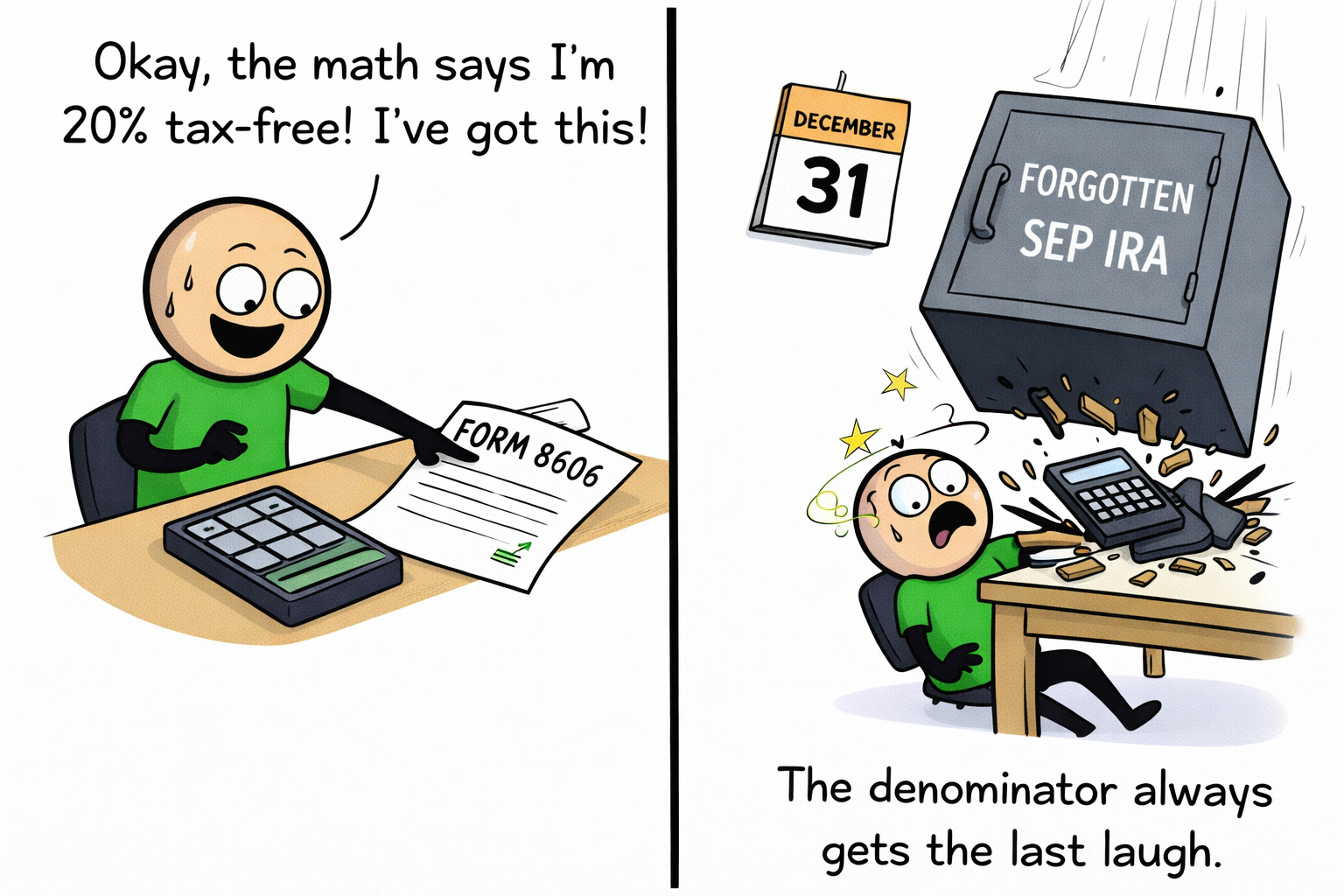
Tax-free percentage = Total nondeductible contributions / Total Traditional IRA balance (December 31)

Multiply the tax-free percentage by the amount distributed or converted. That is the nontaxable portion. The rest is taxable income.

Three things to know about this formula before running it.

First, “total nondeductible contributions” means the cumulative amount of after-tax money you have contributed to any Traditional IRA over your entire lifetime, minus any amounts previously recovered tax-free through earlier distributions or conversions. This running total is tracked on Form 8606, Part I, Line 14. If you have never filed Form 8606, and you made nondeductible contributions, you need to reconstruct that history before the calculation means anything.

Second, “total Traditional IRA balance” includes every Traditional IRA, SEP IRA, and SIMPLE IRA (past the two-year holding period) in your name. Every single one. At every custodian. The balance used is the fair market value as of December 31 of the year the distribution or conversion occurs, plus any distributions or conversions taken during the year, plus any rollovers out of Traditional IRAs during the year.

Third, the formula applies to the entire year at once. You do not calculate it per transaction. If you convert $20,000 in February and take a $5,000 distribution in October, both use the same ratio.


Read more

I write one of these every day, one retirement rule, explained in plain language and verified against the source. The daily email is free: subscribe here.

Frequently Asked Questions

What is the pro-rata rule and why does it affect my tax bill?

The pro-rata rule is an IRS formula that determines how much of your Traditional IRA distribution or conversion is taxable versus tax-free. It applies whenever you have both pre-tax and after-tax money in your Traditional IRAs, and it can significantly increase your tax liability because it taxes distributions proportionally across all your Traditional IRA accounts combined, not just the one you're withdrawing from.

How do I calculate my tax-free percentage using the pro-rata rule?

Divide your total nondeductible (after-tax) contributions by your total Traditional IRA balance as of December 31. Multiply that percentage by the amount you're distributing or converting to find the nontaxable portion; the rest is taxable income. Your nondeductible contributions are tracked on Form 8606, Part I, Line 14, and should reflect any amounts you've already recovered tax-free in prior years.

What date snapshot do I use for calculating my IRA balance in the pro-rata rule?

You must use your total Traditional IRA balance as of December 31 of the year you're making the distribution or conversion. This snapshot includes all your Traditional, SEP, and SIMPLE IRAs combined, not just the one account you're taking money from.

Does the pro-rata rule apply to all IRA distributions and conversions?

The pro-rata rule applies whenever you have a distribution or conversion from a Traditional IRA and you also have nondeductible (after-tax) contributions in any Traditional IRA account. It affects both regular distributions and Roth conversions, and it looks at your entire IRA portfolio combined to calculate what portion is taxable.

Take this further

Try the IRA Pro-Rata Calculator, $79 or included in All-Access
→
Read the full guide
Browse all retirement guides
→
Or get All-Access for $149/year →

Get the retirement rule mistakes most people learn too late

Everyday-language breakdowns of IRS rules, contribution limits, and the deadlines that cost people money. Daily. Free.

←
Why the IRS Treats All Your Traditional IRAs as One Account
→
Why Backdoor Roth Conversions Sometimes Fail