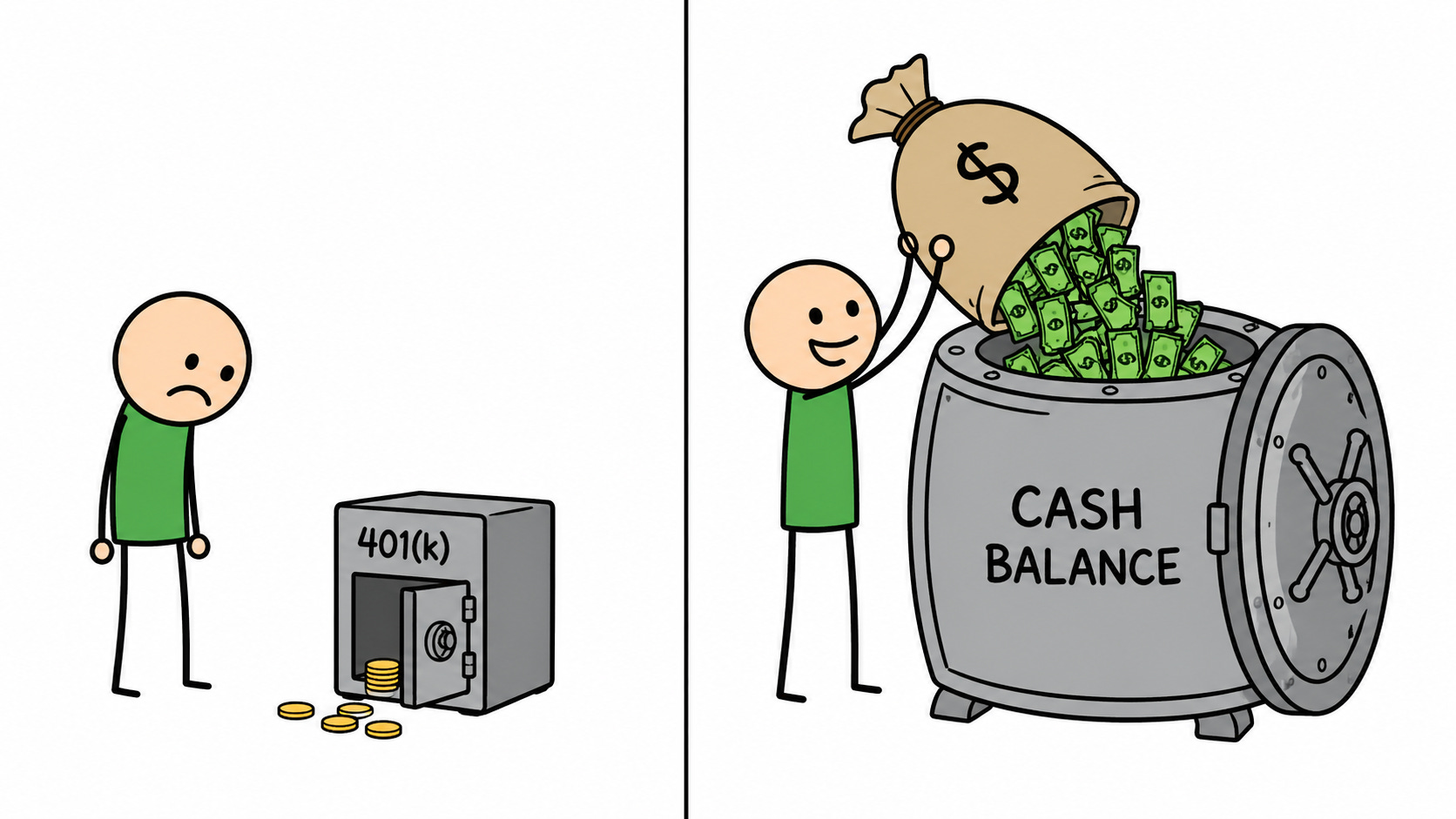
A business owner hits a wall every December. The 401(k) is maxed. Profit sharing is maxed. The combined annual additions limit per person tops out at the IRS ceiling. Income for the year sits at $600,000, sometimes more. The CPA looks across the desk and says the words “cash balance plan.” The owner nods like they understand, walks back to the car, and types “what is a cash balance plan” into Google before the seatbelt clicks.
A cash balance plan is a defined benefit plan that gives each participant a hypothetical account balance. The plan promises a future benefit based on annual pay credits and interest credits set in the plan document. The employer is on the hook for funding that promised benefit. Participants don’t pick investments and don’t see market gains or losses inside their balance.
The reason business owners care is the contribution math. A 401(k) plus profit sharing combo tops out at the IRS annual additions limit per person. A cash balance plan sits on top of that. Pay credits for older owners can run into six figures because the contribution is calculated to fund a future benefit, and the closer the owner is to retirement age, the larger the annual contribution required to get there. Contributions are deductible in the year they’re made, and the limits don’t compete with the 401(k) limits.
An actuary calculates the required contribution every year. The plan files Form 5500 annually. Plan testing rules apply, and the plan must cover non-owner employees with a reasonable benefit. ERISA applies. Skipping a year isn’t allowed once the plan is running.
Two deadlines matter and they aren’t the same. The plan must exist for a tax year, and contributions must be made by a separate deadline. For a calendar-year plan year, the minimum required contribution is due 8.5 months after plan year-end. For tax deductibility, contributions must be in by the tax filing deadline including extensions. Under SECURE Act changes, an employer can adopt a new plan up to the tax filing deadline including extensions and elect to treat it as effective for the prior tax year. Cash balance plans qualify for retroactive adoption since they don’t include elective deferrals.
If the contribution lands after the deduction deadline, the deduction is lost for that tax year. The required minimum contribution is still owed. Underfunding triggers an excise tax under IRC Section 4971 starting at 10% of the unpaid amount, climbing to 100% if not corrected. The IRS keeps the plan on the radar until the funding gets caught up.
A 55-year-old solo dentist runs the practice as an S-corporation and pays herself $345,000 in W-2 wages. She already runs a 401(k) profit sharing plan, contributing 6% of her pay to the profit sharing side to keep the tax deduction clean, and layering her age-50 catch-up on top. Because her wages put her over the high earner threshold, the catch-up goes in as Roth.
Her CPA recommends adding a cash balance plan with a target retirement age of 62. The actuary runs the numbers based on her age, compensation, and assumed retirement date. The required pay credit comes back at $190,000 for the first plan year.
She adopts the plan effective for the calendar year that just ended, signing the documents in March before her tax filing deadline. The plan year is the calendar year. She files her S-corp return by the extended deadline in September and contributes the full $190,000 by that date. The cash balance contribution is deductible on the prior year’s return.
Total combined retirement contributions for the year exceed $240,000. The cash balance piece drives most of the deduction at her marginal tax rate, large enough to noticeably change her tax bill. She has rank-and-file staff, so the plan also provides them with a meaningful benefit. That’s the cost of admission.
Year two rolls around. The actuary recalculates. Pay credit comes in at $205,000. She funds it before the next extended deadline. Form 5500 gets filed. The actuary checks the math.
If she missed the funding deadline, she’d lose the deduction for that year, still owe the underfunded amount, and start accruing the 4971 excise tax. The IRS doesn’t care that she’s a great dentist.
Cash balance plans are standard tools for business owners with high taxable income and a few years left in the runway. The size of the deduction comes from the underlying math, which favors older participants and stable cash flow.
What matters is whether the business can sustain the contribution every year. The plan stays running once started. The contribution is required even in a down year, until the plan is frozen or terminated. That’s the trade for the deduction. Owners who treat it like a discretionary contribution get an unpleasant letter from the IRS.
The setup deadline, the funding deadline, and the deduction deadline are three different things. Knowing which one is which is the difference between a clean tax return and a messy one.
I write one of these every day, one retirement rule, explained in plain language and verified against the source. The daily email is free: subscribe here.
Full archive, worksheets, and search live at RetirementNewsRundown.com.
Disclaimer This article is for educational and informational purposes only. It is not tax, legal, or financial advice and does not create an advisor–client relationship. Always consult appropriate professionals regarding your specific situation.