March 27, 2026

What “Right” Actually Looks Like

Why filing your taxes early could be the retirement move you're accidentally skipping.


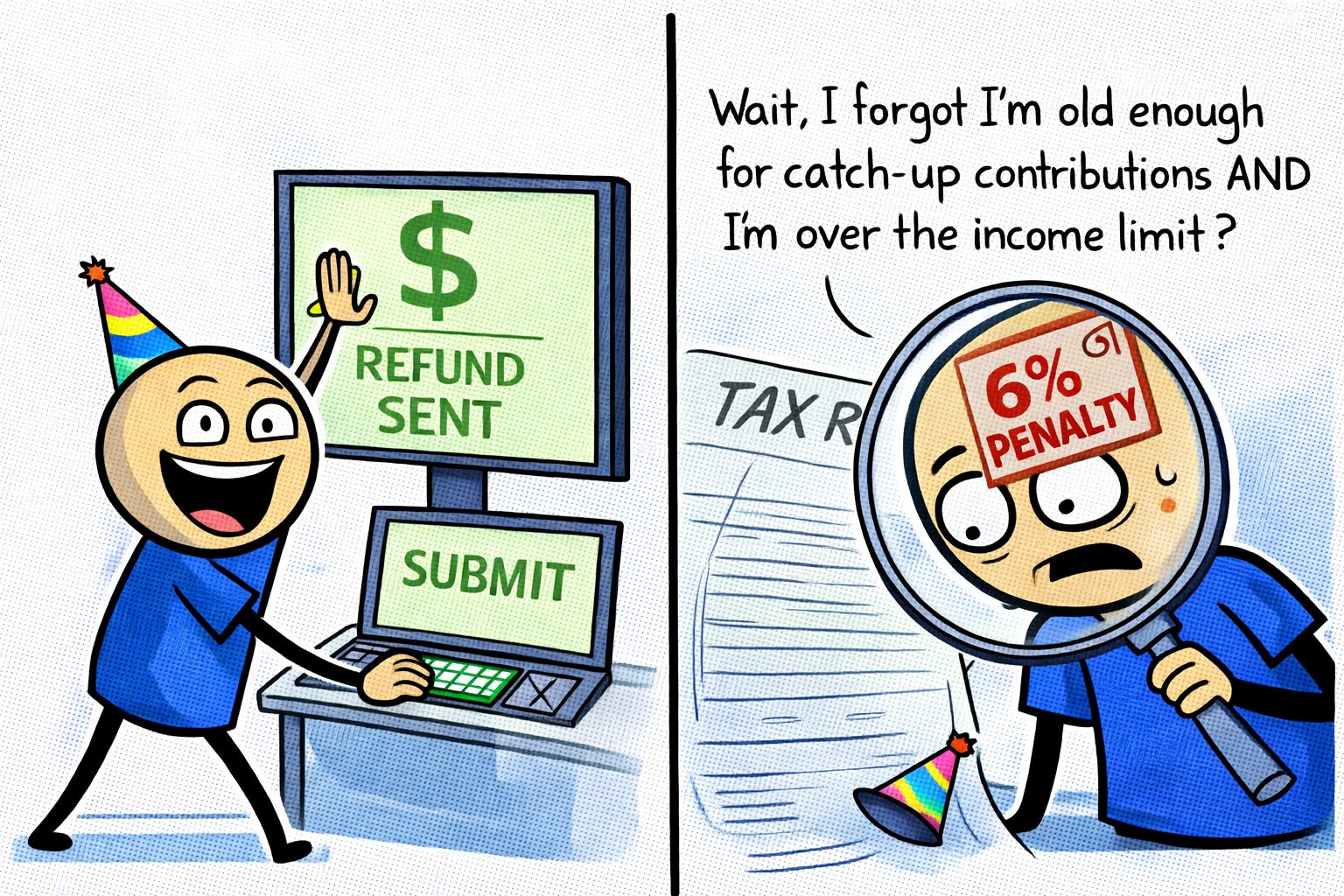
Most people define a successful tax season by one event: the refund lands. That is the finish line in their mind. File, wait, deposit, done.

But a refund only means you overpaid during the year. It is the IRS returning your own money. It says nothing about whether your retirement accounts are in order, whether your contributions were valid, or whether you left deductions on the floor. A correct return accounts for all of those things. A fast return accounts for none of them.


Getting it right starts before you file. It starts with knowing what happened in your retirement accounts during the tax year and confirming that every transaction, contribution, and conversion lines up with the rules.

Read more

I write one of these every day, one retirement rule, explained in plain language and verified against the source. The daily email is free: subscribe here.

Frequently Asked Questions

What's the difference between filing a tax return and filing a correct tax return?

A filed return simply means you submitted your paperwork to the IRS, but a correct return ensures all your retirement account contributions, conversions, and transactions follow the rules and you've claimed all eligible deductions. The difference can cost you in penalties, missed contributions, and years of lost compound growth.

Why shouldn't I celebrate just because I'm getting a refund?

A refund only means you overpaid taxes during the year—the IRS is returning your own money. It doesn't tell you whether your retirement accounts are properly set up, your contributions were valid, or if you missed deductions. Getting a refund doesn't mean your return is correct.

When should I start preparing for a correct tax return?

You should start before you file by reviewing what happened in your retirement accounts during the entire tax year. Verify that every transaction, contribution, and conversion complies with IRS rules so you can catch issues early and ensure accuracy.

What could go wrong if my retirement return isn't correct?

An incorrect return can result in penalties from the IRS, disallowed contributions, and missed opportunities for tax-advantaged growth. The long-term impact includes years of compounding returns you'll never recover, making accuracy critical for your retirement savings.

Take this further

All-Access
Get the tools that go with the rules.
All-Access includes every retirement planning and correction tool on the site. $149/year or $19/month.
→
Read the full guide
Browse all retirement guides
→

Get the retirement rule mistakes most people learn too late

Everyday-language breakdowns of IRS rules, contribution limits, and the deadlines that cost people money. Daily. Free.

←
Getting Through Tax Season vs Getting It Right
→
Why Relief Is Not the Same as Resolution