March 25, 2026

Which Decisions Actually Follow You Forward

The retirement moves you think are permanent might not be, but some definitely are.


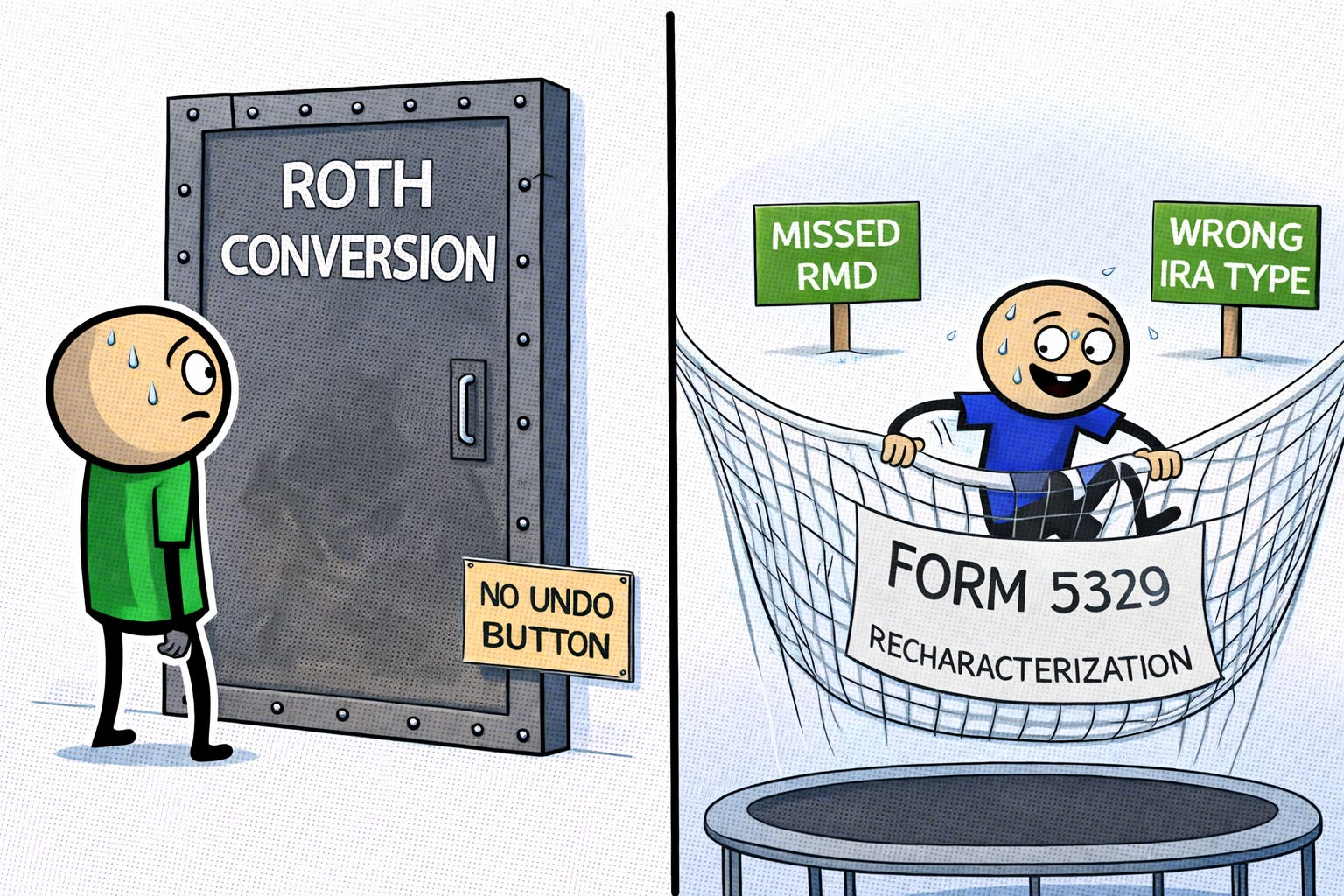
The retirement system treats most decisions as reversible. People treat all of them as permanent. The gap between those two things causes more unnecessary panic than any single rule in the tax code.

Someone contributes to the wrong IRA and assumes the money is trapped. Someone misses an RMD and assumes the IRS is coming for them. Someone does a rollover incorrectly and assumes they’ve blown up their retirement account. Meanwhile, the actual irreversible decisions, the ones that genuinely follow you forward with no undo button, get made casually because nobody flagged them as permanent.

Understanding which decisions stick and which ones bend is the difference between making retirement planning decisions from a place of clarity and making them from a place of fear.


Roth conversions are permanent. Before 2018, you could undo a Roth conversion through a process called recharacterization. The market dropped after your conversion? Recharacterize it back to a Traditional IRA and pretend it never happened. The Tax Cuts and Jobs Act eliminated that option. Starting with conversions made in 2018 and later, once you convert, the income is locked in for that tax year.

Read more

I write one of these every day, one retirement rule, explained in plain language and verified against the source. The daily email is free: subscribe here.

Frequently Asked Questions

If I contribute to the wrong type of IRA, is my money trapped there forever?

No, the retirement system is actually more forgiving than most people think. Contributions to the wrong IRA type can typically be corrected or moved without permanently damaging your retirement plan. The key is understanding that most retirement decisions are reversible, so there's no need to panic if you make this kind of mistake.

What happens if I miss a required minimum distribution (RMD)?

While missing an RMD is serious and comes with penalties, it's not an automatic death sentence for your retirement account. The IRS has processes for addressing RMD mistakes, and the situation is often more correctable than people fear. However, this is one of the decisions worth getting right from the start rather than relying on fixes afterward.

Which retirement planning decisions are actually permanent and can't be undone?

Roth conversions are a key example of a permanent, irreversible decision that follows you forward with no undo button. Unlike most other retirement moves, you cannot reverse a Roth conversion after 2018, so these decisions deserve careful planning and attention before you execute them.

How should I approach retirement planning differently if most decisions are reversible?

Rather than making decisions from a place of fear about getting everything perfect, focus your detailed planning and time on the few truly irreversible decisions. For the reversible decisions, you can act with more confidence knowing they can be corrected if needed, which helps you make clearer choices overall.

Take this further

All-Access
Get the tools that go with the rules.
All-Access includes every retirement planning and correction tool on the site. $149/year or $19/month.
→
Read the full guide
Browse all retirement guides
→

Get the retirement rule mistakes most people learn too late

Everyday-language breakdowns of IRS rules, contribution limits, and the deadlines that cost people money. Daily. Free.

←
Why March Decisions Echo for Years
→
How Pressure Changes Decision Quality