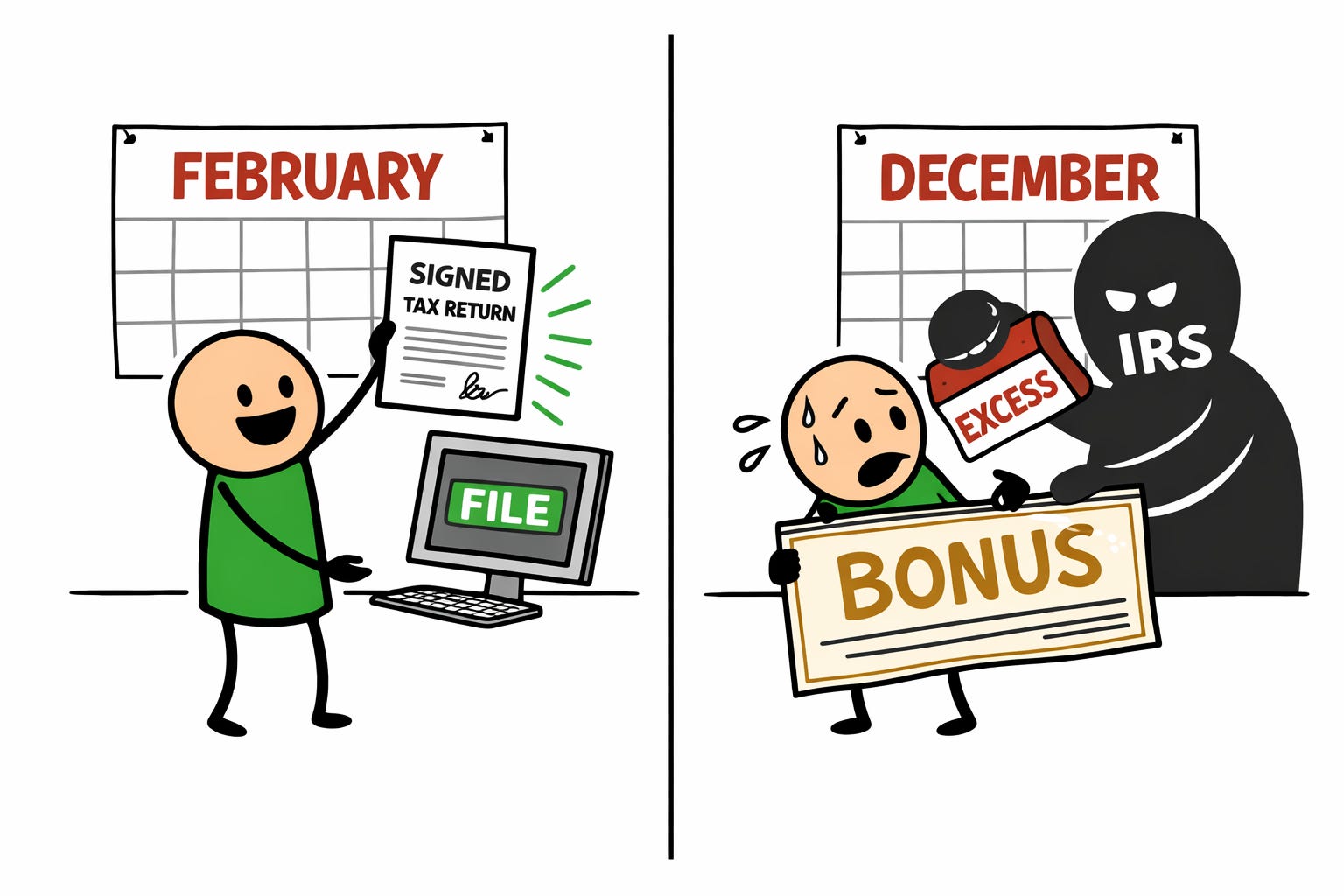
Most people assume that once the tax return is filed, every number on it is permanent. The contribution amount. The year it belongs to. The deduction. Done.
That is not entirely true. But the window to change it is shorter and more painful than most people expect.
If you file your 2025 return on February 20 and report a $7,000 traditional IRA contribution, that contribution is now on record with the IRS. It is part of your adjusted gross income calculation. It affects your deduction. It flows through to every other number on the return.
Then in March you realize your MAGI was too high and the contribution should not have been deductible. Or you realize you already contributed $7,000 in 2025 and this one should have been designated for 2026.
You can still fix it. But fixing it means filing an amended return. It means contacting the custodian to either recharacterize or remove the contribution. It means calculating the net income attributable to the contribution and removing that as well. And if the tax filing deadline has not passed, you still have time to do a corrective distribution.
If the tax filing deadline has passed, the correction becomes more expensive. The 6% excise tax starts. It applies every year the excess remains in the account. An amended return can stop the bleeding, but it cannot undo the penalty for the year the excess existed.
There is a specific scenario that trips people up more than any other. Someone contributes to a Roth IRA early in the year, files their return, and then later in the year gets a raise, a bonus, or stock vesting that pushes their MAGI above the Roth limit.
The contribution was legal when they made it. It was legal when they filed. But by December 31, their income crossed the threshold and the contribution becomes excess retroactively.
Filing early did not protect them. The Roth income limit is based on full-year MAGI. It does not matter when the contribution was made. It matters what the income was on December 31.
The October 15 extended deadline is the last stop. If you filed an extension, you have until October 15 to remove an excess contribution and avoid the 6% penalty for that year. After October 15, the penalty applies regardless.
If you did not file an extension, your deadline was April 15. Once that passes, the excess is locked for the year and the 6% penalty is assessed on your next return using Form 5329.
Filing your return is a snapshot. It records what you knew at the time. But the IRS does not grade on the snapshot. It grades on the full year. If the full year changes what was true when you filed, you are responsible for going back and fixing it.
The return is not a lock. It is a starting point. The calendar is the lock.
I write one of these every day, one retirement rule, explained in plain language and verified against the source. The daily email is free: subscribe here.
Full archive, worksheets, and search live at RetirementNewsRundown.com
For more information on Traditional and Roth IRAs read the Guides Page.
Disclaimer This article is for educational and informational purposes only. It is not tax, legal, or financial advice and does not create an advisor-client relationship. Always consult appropriate professionals regarding your specific situation.